
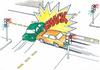
 If you bend your fender in British Columbia today, don't expect the police to attend. In fact, police reporting requirements for minor crashes vanished long ago. Unless someone is injured or killed, officers rarely attend the scene.
Instead, firefighters often double as administrative assistants, helping drivers swap details and sweep up glass. This shifts a massive burden onto local resources and creates a critical loophole: because police aren't there, no traffic tickets are issued to the drivers who actually caused the chaos.
Flying Blind on Road Safety
This lack of on-scene enforcement creates a data blind spot for the province. ICBC admits it cannot track complete or accurate crash data for BC because police reports are no longer being submitted.
This reality raises serious questions about provincial oversight:
- Blind Agencies: The very organization tasked with reducing crashes is flying blind, missing a clear picture of the scope of the problem.
- Ignored Warnings: By failing to look after the "pennies" of minor fender-benders, the province struggles to fix million-dollar systemic issues.
- Pure Luck: We are choosing to ignore dangerous driving habits simply because the occupants got lucky and walked away uninjured this time.
The Government Finger-Pointing Game
The lack of accountability goes even deeper when looking for solutions. When asked how many unticketed crashes a driver must cause before the province steps in, government bodies simply point fingers.
The Superintendent of Motor Vehicles redirects accountability to ICBC. Meanwhile, ICBC vaguely notes that a driving ban could happen, but only if the driver already has a history of ticket violations. When asked explicitly about mandatory re-testing or driver retraining programs, both agencies completely ignored the questions.
Subsidizing Reckless Driving
Minor crashes are quietly morphing into just another "acceptable risk" of driving on BC highways. Because there may be no immediate legal consequences for these minor wrecks, the true costs are hidden and redistributed:
- Higher Insurance: The direct financial costs of vehicle damage are spread among all BC drivers via rising ICBC premiums.
- Taxation Burden: The indirect costs—such as fire department dispatch and emergency response—are covered through your local property taxes.
By normalizing these "small" wrecks, we are essentially subsidizing reckless driving. Will the size of these acceptable risks only continue to increase in the future because of the situation we are ignoring today?
Have you been in a minor crash where police didn't attend? Road safety affects us all. Please use the sharing buttons below to send this article to friends, family, or your local community groups, and let's get the conversation started about accountability on BC roads.
- Log in to post comments
Comments
I've often wondered why drivers who are deemed at fault for a collision aren't issued a ticket. I think a driver who causes a collision is much more deserving of a ticket than drivers who, for example, slowly creep across the stop line at an empty 4 way stop without first having come to a complete stop.
Many drivers that I know routinely creep through right-on-red turns or 4 way stops without first coming to a full stop. Should there be an enforcement project targeting this action, they'd instantly be hit with a fine, points and possible insurance premium increases. All for an acttion that was performed so slowly that it wouldn't even scuff a bumper should a collision occur.
It doesn't seem like an appropriate use of resources to ignore the actions that cause collisions to instead spend time penalizing those that don't.
- Log in to post comments
It is not ICBC's mandate (legislatively or otherwise) to reduce collisions. While it is certainly in their best interests to do so, and while the government typically takes your insurance premium dollars and uses them to promote crash reduction, the responsible entitly would be the Ministry of Transportation and Transit. Historically the ICBC has spent premium dollars on advertising/promotion of safe driving, "black spot" remediation (fixing up dangerous portions of highways or intersections through infrastructure improvement), Counter Attack funding and the like.
The BC government has for many years treated our premium dollars as tax revenue, to the point where people start to actually believe that it's appropriate for them to do so.
Don't get me wrong. Most of the time the goals are laudable, but the source of the revenue should not be through "hidden" taxes via insurance premiums.
The police should be financially supported through appropriate tax revenue, which one would expect would come from the MOTT. This is the entity that should be "blamed" for insufficient funding and data collection as related to traffic crashes.
I believe this to be an important distinction, as we already have enough to complain about when it comes to insurance companies, and the reality that is their business model - they take your money and don't pay out on claims: that's their means of profit and very existence.
- Log in to post comments
Traffic Ticket Conundrum