
 Did you just get pulled over and handed a BC traffic ticket? Don't panic, but prepare to take action. You have a strict 30-day window to either pay the fine or register an official dispute. Doing nothing means an automatic guilty verdict and the possibility of penalty points on your driver's licence. Read this step-by-step breakdown to learn what to say to the officer, how to document the circumstances immediately, and how to choose the best legal path forward.
Initial Contact and Ticket Service
Pull over and stop immediately. Produce all documents requested. Listen carefully to what the officer has to say, and ask questions politely. Even if you are unhappy, being argumentative might prevent you from hearing all that is said, and it could be important to your defence.
While the officer prepares the ticket, use this time to consider your situation, make notes, and prepare questions. If the ticket is offered to you to sign, you can do so; otherwise, politely decline.
Electronic Traffic Ticket (e-Ticket)
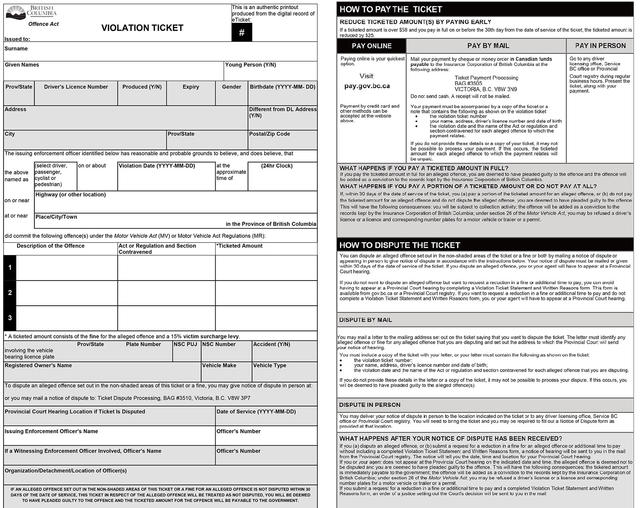
Electronic tickets (e-tickets) are the standard for traffic enforcement in British Columbia. The hard copy will not have a place for a signature. Signatures are not required and you will simply be handed the copy to deal with. Tickets for offences under other provincial statutes may still be written by hand.
Post-Stop Action and Documentation
Ask your questions before you hand the ticket back if you are signing. Do not make remarks like "I'll see you in court!" as it could affect your case later. You can ask for a business card in case you want to contact the officer later for clarification.
This is a great time to make notes on the traffic stop as you saw it. Record witness details, take pictures, and make a sketch to help you remember the details of the stop, potentially for a trial down the road. Read all the papers issued to you carefully and thoroughly.
Understand the Charges
Read the section of the statute you are charged under. If you don't understand it, feel free to ask for help. At this point, you should have a good idea of what you are up against. If not, consider consulting with a lawyer. For up-to-date legal workflows, you can consult online self-help portals like Clicklaw BC or the official Provincial Court of BC Guide.
Decide What To Do
You now have to make one of four decisions:
- Pay the Ticket: If you pay the ticket within 30 days, you are eligible for a discount. The ticket can be paid on line.
- Dispute the Penalty: Follow the instructions on the back of the ticket to dispute the penalty shown on the front, or ask for a reduction in the fine amount or for more time to pay.
- Contact the Issuing Officer: If you can prove that you did not commit the infraction, you can contact the officer to ask for the ticket to be withdrawn.
- Plead Not Guilty and Dispute the Allegation: Follow the instructions on the back of the ticket and appear in court to defend your case.
Help Protect Other Drivers
Road safety is a shared responsibility. If you found this step-by-step ticket breakdown helpful, please use the sharing buttons below to pass it along to family, friends, or co-workers who need to know their rights on BC roads.
- Log in to post comments