
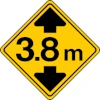
 Failing to measure a load properly is an expensive crisis on B.C. highways. About once a month, an over-height vehicle or its load is involved in a collision with an overpass somewhere in British Columbia. According to the Ministry of Transportation and Transit, these preventable infrastructure crashes cause millions of dollars in structural damage, gridlock commuter traffic, and compromise public safety.
The Most Common Causes of Over-Height Highway Collisions
In British Columbia, the law is absolute: it is entirely up to the commercial vehicle driver to know the exact maximum height of their vehicle and its load before hitting the road. When approaching overhead infrastructure, motorists must look for mandatory clearance signs to ensure a safe, legal fit.
Beyond driver complacency, the Commercial Vehicle Safety and Enforcement (CVSE) branch identifies the top three root causes of bridge strikes as:
- Permit Omissions: Operating a commercial vehicle without obtaining a mandatory over-height permit.
- Route Violations: Failing to follow the strictly designated routes outlined within an issued permit.
- Improper Load Reduction: Neglecting to securely lower, retract, or reduce the transport load to its lowest possible height.
Massive Penalty Increases: Up to $100,000 Fines and Jail Time
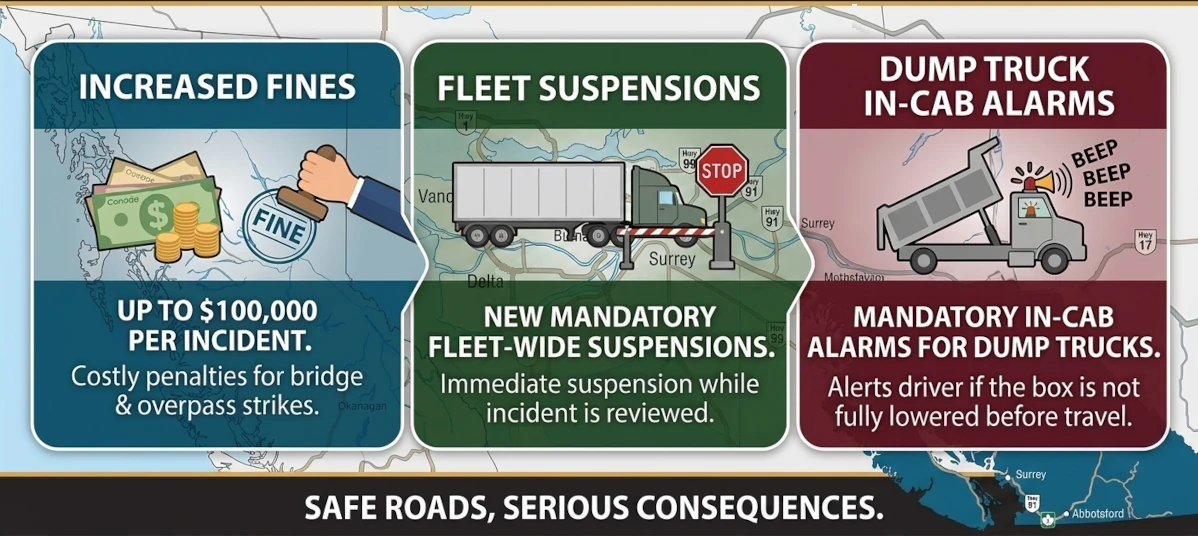
While roadside ticket fines for basic over-height violations sit at $575, the province has implemented the toughest infrastructure protection laws in Canada. Under updated BC Commercial Transport Act amendments, courts can now penalize non-compliant drivers with fines up to $100,000 and up to 18 months of imprisonment for severe infrastructure strikes.
Severe Administrative Sanctions for B.C. Fleets
The consequences extend far past the individual driver. Under Compliance Circular # 05-2023, the provincial government has established a strict enforcement framework targeting carriers holding a registered B.C. Safety Certificate.
Following an infrastructure strike, a transport company faces immediate escalating administrative actions, including:
- Fleet-Wide Grounding: Immediate suspension of the carrier's entire operational fleet during active investigations.
- Mandatory Safety Audits: Full, intrusive corporate compliance audits before any operating privileges are reinstated.
- Certificate Cancellation: Permanent revocation of the company’s B.C. Safety Certificate for repeat or flagrant offenses.
Mandatory In-Cab Warning Alarms for Dump Trucks
To tackle the specific danger of raised dump boxes, strict equipment regulations are in full effect. All commercial dump-style vehicles operating in B.C. with a box capable of rising more than 4.15 meters above the ground must feature an integrated in-cab warning device. This safety mechanism must trigger a highly noticeable visual or audible alarm if the truck moves while the box is raised.
Failing to have a certified, functional in-cab alarm installed results in an automatic roadside fine of $598.
Help Protect Our Infrastructure: Share This Article
- Log in to post comments
Comments
When we switched to metric my brother complained that he had to convert from Imperial to metric. I went out and bought him a 50m Eslon tape and a measuring rod both only in metric.
This is what B.C. needs to implement. All commercial vehicles be required to carry both a tape and pole that only has metric, none of this two sided where Imperial and metric are available. Box trucks should be required to have the height in metric clearly labelled on the side of the vehicle along with the other information required by law.
When vehicles pull across the scales or are stopped by CVSE one of the items to be checked does the driver know the height of his load or vehicle. This information can be added to the drivers log. As they are electronic it could easily be added that unless the height of the vehicle is entered the vehicle cannot be operated. If a driver is pulled over and the height is not recorded correctly immediate removal of vehicle from the road for one month, driver and owner both fined.
Dump trucks adding a audio warning is fine but all vehicles are required to have two objects one on each side of the vehicle, called mirrors. If the driver looks into these devices they can easily see where the box is and from my memory from 70 years back when the box came down you could also hear it. Of course we didn't have music systems plugged into our ears.
There is no excuse for ever hitting overhead objects. It is driver incompetence.
- Log in to post comments
Overheight vehicles.