
Quick Answer: The best way to be seen on a motorcycle is to combine bright, reflective riding gear, proper lane positioning, an illuminated headlight and defensive riding techniques. While these measures improve your visibility, never assume another driver has seen you—especially at intersections where many motorcycle collisions occur.
One of the most common statements made after a collision involving a motorcycle is, "I didn't see the motorcycle." Most drivers aren't intentionally ignoring riders. Instead, they simply fail to recognize a motorcycle in time to avoid a conflict.
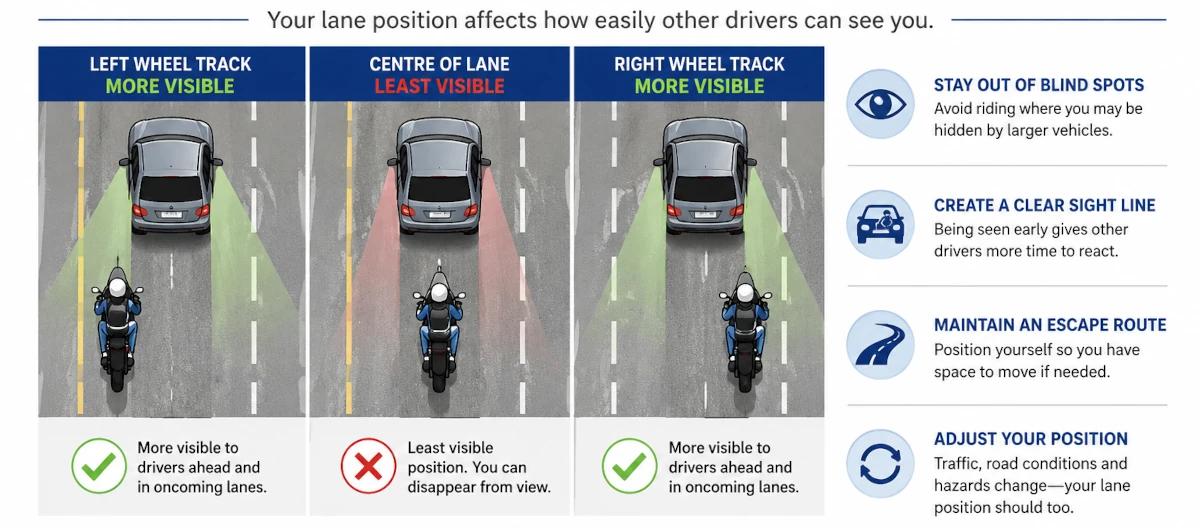
Making yourself more visible—or conspicuous—cannot guarantee that every driver will notice you. It does, however, increase the likelihood that you'll be recognized early enough for another road user to make a safe decision. One of the most effective ways to improve your conspicuity is by choosing a lane position that makes you easier to see.
Why Motorcycle Visibility Matters
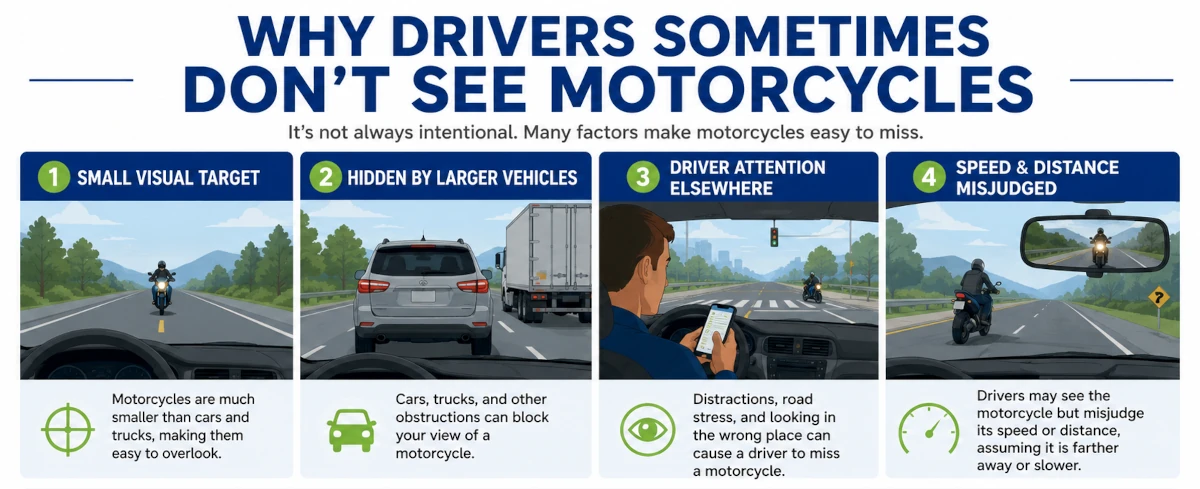
A motorcycle presents a much smaller visual target than a passenger vehicle. Drivers scanning an intersection or preparing to turn often expect to see cars and trucks, not motorcycles. Safety researchers describe many of these crashes as "looked but failed to see" collisions.
We often refer to these as SMIDSY ("Sorry Mate, I Didn't See You") crashes. Understanding why they occur helps riders appreciate why visibility and defensive riding must work together.
Wear Bright and Reflective Riding Gear
Dark riding gear may look good, but it offers little contrast against asphalt, trees or other traffic.
- Wear fluorescent yellow, orange or lime colours to improve daytime visibility.
- Choose jackets, pants, gloves and boots with reflective material for riding after dark.
- A brightly coloured helmet often attracts attention before the rest of the motorcycle becomes visible.
Fluorescent materials are most effective during daylight, while reflective materials work best when illuminated by headlights at night.
Use Your Headlight Effectively
Your headlight isn't just for helping you see—it also helps others notice you.
Motorcycles operated on public roads in British Columbia are required to display an illuminated headlight. Some riders also install approved headlight modulators that vary the intensity of the headlight during daylight hours. Learn more in our article on modulating motorcycle headlights.
Remember that even if another driver notices your headlight, they may still misjudge your speed or distance.
Choose a Lane Position That Improves Visibility
Your lane position should do more than avoid hazards—it should help other drivers see you.
- Avoid riding directly behind large vehicles where you disappear from view.
- Stay out of other drivers' blind spots whenever practical.
- Adjust your position within the lane to improve your visibility through intersections and in mirrors.
- Maintain adequate following distance so drivers ahead have more opportunity to notice you.
If you'd like to learn more, see our article on blind spots and why they're particularly important for motorcyclists.
Use the Entire Lane
Motorcyclists are entitled to the full use of a traffic lane. Riding too close to the curb may encourage unsafe passing or lead other drivers to assume there is room to squeeze by.
Choose the lane position that provides the best visibility, the greatest margin for error and an escape route if another road user makes a mistake.
Intersections Deserve Extra Attention
Many serious motorcycle crashes occur when another driver turns left across the rider's path or pulls out from a side street.
As you approach an intersection:
- Reduce speed if necessary.
- Cover your brakes.
- Watch the front wheels of waiting vehicles for signs of movement and avoid lingering in blind spots as you approach the intersection.
- Don't rely on eye contact as proof that you've been seen.
Maintaining a safe following distance also gives you more time to respond if traffic suddenly stops or another driver makes an unexpected manoeuvre.
Even when a driver looks in your direction, they may not recognize your motorcycle in time. Understanding why this happens can help you make better decisions on the road.
Visibility Is Only Part of the Solution
One of the hardest lessons for new riders is accepting that visibility is never entirely under your control. You can wear the brightest jacket available, ride with your headlight on and choose excellent lane positions, yet another driver may still fail to recognize you.
That reality can feel unfair, but it reflects how human attention works. People often notice what they expect to see and overlook what they don't expect, especially when they're busy scanning for larger vehicles.
Experienced riders understand this limitation. They make themselves as visible as possible, but they also ride as though another driver may not have seen them. That mindset encourages earlier decisions, smoother riding and more time to avoid a collision.
British Columbia Considerations
British Columbia requires motorcycles operated on public highways to display an illuminated headlight. Approved headlight modulators are also permitted. These measures improve conspicuity, but they should never be relied on as proof that another road user has noticed you.
Frequently Asked Questions
Does wearing bright colours make motorcycles safer?
Bright and fluorescent riding gear helps riders stand out during daylight, while reflective materials improve visibility at night. They reduce the chance of being overlooked but cannot eliminate the risk.
Why do drivers say they didn't see the motorcycle?
Drivers may genuinely look toward a motorcycle without recognizing it because of its smaller size, surrounding visual clutter or divided attention. This "looked but failed to see" phenomenon is why motorcyclists are encouraged to ride defensively and never assume they have been noticed.
Should I always ride with my headlight on?
Yes. An illuminated headlight makes a motorcycle more noticeable and is required on public roads in British Columbia.
Is changing lane position safer than staying in one place?
Often, yes. Adjusting your lane position can improve your visibility to other drivers while preserving an escape route. The best position depends on traffic, road conditions and potential hazards.
Improving your visibility gives other road users a better opportunity to avoid a collision—but it does not remove your responsibility to anticipate their mistakes.
If you know someone who rides a motorcycle, this information may help improve visibility and encourage drivers to look twice before turning or changing lanes.
- Log in to post comments