RESEARCH - Enforcement of Cycle Passing Distances
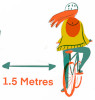 Cycling advocates in BC would like to see our government enact a safe passing distance law so that drivers are aware of how much space they must leave between their vehicle and the cycle as they drive by. Two US cities, Grand Rapids, Michigan and Knowville, Kentucky have such laws and were chosen by NHTSA for a study of how high visibility enforcement of the law influenced passing distances.
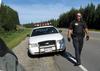
 QUESTION: I'm an Alberta driver visiting BC. I went through a check stop where I was told to pull over and they were going to write me a notice and order for my windshield. One of the other cops walked over while she was in the middle of writing that ticket and told her to make it a number two. Now is this even enforceable on an Alberta vehicle?
 Have you ever wondered if a vehicle was stolen but didn't want to call the police to find out? Now you can use the same search tool that the police do with your own home computer and internet connection! Simply visit the Canadian Police Information Center (CPIC) web site and
 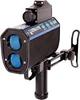 Have you ever wondered about the instruments that the police use to measure vehicle speeds on our highways? My favourite tool was LIDAR because it gave me the ability to accurately measure the speeds of individual vehicles. Although the laser must be used from a stationary position, either hand held or on a tripod, being able to target a specific vehicle made it superior to RADAR on a busy highway.
 Question: I filed for disclosure and received a call today from the traffic court registry. They told me that the Crown Counsel is not involved and that only the officer who issued the ticket can provide disclosure. I requested the officers evidence and notes the same day I filed for dispute and never received a response.
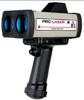 It's a beautiful spring day outside and I don't feel like writing a serious article for you this morning. I'm going to wander off in another direction and tell you a story about traffic cop humour on a bright, sunny day beside a BC highway where a group of us had set up a laser speed monitoring operation that was keeping us busy.
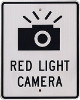 I’m hoping you can point me in the right direction. My daughter was grazed by a driver who sped through a red light, to be honest she feels if she’d have been walking any faster she’d have been hit and likely killed due to the speed at which the car was traveling.