NEW Tab on Road Signs
 Have you ever noticed a small rectangular sign with the word NEW mounted beneath a traffic sign in British Columbia? It is intended to catch your attention and alert you to a change in the traffic controls ahead.

Information regarding traffic signs and signals.
Have you ever noticed a small rectangular sign with the word NEW mounted beneath a traffic sign in British Columbia? It is intended to catch your attention and alert you to a change in the traffic controls ahead.
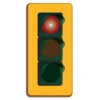 Most drivers in British Columbia know that a red traffic light means stop and stay stopped until the light turns green. But that is not always the case. It depends on whether the red light is at an intersection or not.
 Question: A while ago you wrote about the test that new drivers have to take to get their licence. I took the practice test and there were at least two road signs in it that I had never seen before. I'm worried that there are other signs I wouldn't recognize and wonder if there is a reference that I can use to look them up.
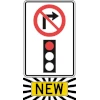 Question: I routinely drive in a particular area and was recently ticketed for turning right at a red light. I was told that a new sign prohibited right turns on red. I had driven this route many times before and did not notice the sign, which appeared to have been installed only recently. Is there any way to find out when the sign was installed? And can I ask for some leeway because I did not know the restriction was there?
 A green light allows you to proceed—but only when it is safe. Before entering the intersection, pause briefly, scan left, right and left again, and confirm the intersection is clear.
 Quick Answer: A flashing traffic signal means the normal traffic light cycle is not operating. In British Columbia, a flashing red light requires you to stop before proceeding when safe, a flashing yellow light means proceed with caution, and a flashing green light identifies a pedestrian-controlled intersection where drivers must be prepared to stop for pedestrians.
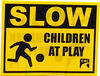 Every now and then, you will see them on a residential street: temporary plastic or corrugated yard signs, pushed into the grass on wire stakes, asking drivers to slow down because children are playing. They are always put up by residents with the absolute best of intentions. Frustrated by speeding traffic outside their front doors, neighbours are hoping to protect the kids on their block.
 As a knowledgeable driver, you are likely aware of the three blanket speed limits that cover the province of British Columbia. These statutory limits are 80 km/h outside a municipality, 50 km/h within a municipality, and 20 km/h on a municipal lane. However, there is another official method for establishing a localized blanket speed zone: the use of an "Area" sign.
 We’ve all been there: you’re driving on a Sunday, the road is perfectly paved, there isn't a worker in sight, but the orange 70 km/h signs are still up. Do you have to slow down? A recent BC Provincial Court decision, R. v. Markowsky, suggests that if the "reason" for the sign is gone, the legal requirement to obey it might be gone too.
 A common point of confusion in cities like Vancouver is the intersection equipped with pedestrian-controlled lights on the main road and stop signs on the cross-street.