
 A 2015 Audi owned by Le Min was photographed travelling through an intersection in Vancouver at a speed between 41 and 60 km/h over the 50 km/h speed limit. Ms. Min received an intersection safety camera speeding ticket which she disputed. The matter was heard in traffic court where she pled guilty to the offence.
Ms. Min found herself in financial difficulty due to COVID and asked for consideration of this after pleading guilty at the trial. Judicial Justice Bowes varied the mandatory penalty of $368 and this resulted in a fine of $138 being assessed.
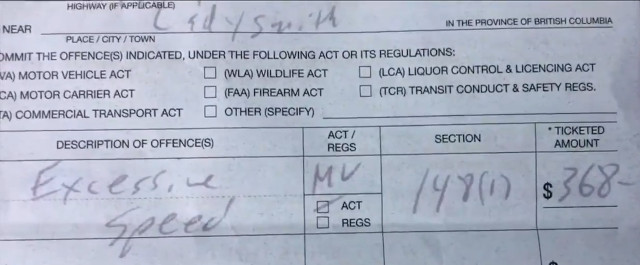
Minimum Speeding Ticket Fines
Crown appealed the sentence, citing the fact that the judicial justice erred in reducing the penalty.
The Offence Act forbids reductions in speeding fines.
88 (2) If a minimum fine is established under the Motor Vehicle Act for contravention of a provision of that Act, a justice must not impose under subsection (1) a fine of less than the minimum established.
The fine amounts are found in Schedule 3 of the Violation Ticket Adminstration and Fines Regulation.
The Appeal Decision
Madam Justice Lyster agreed with the Crown's position that the Judicial Justice did not have the authority to reduce Ms. Min's speeding ticket fine. She cited the case of British Columbia (Attorney General) v Guo where this had already been determined.
Ms. Min was ordered to pay the $147 difference and asked if she needed time to pay it. She responded that the Justice could pick any day that she felt like. The justice gave her a month to pay.
Financial Hardship
Traffic court justices do recognize financial hardship when imposing a penalty. Reductions in the fine amount are possible when the law does not forbid it. Granting extra time to pay can be done as well. If you find yourself in this situation, be prepared to explain to the justice why you need consideration and have some idea of how long it will take to pay.
Share This Article
- Log in to post comments