
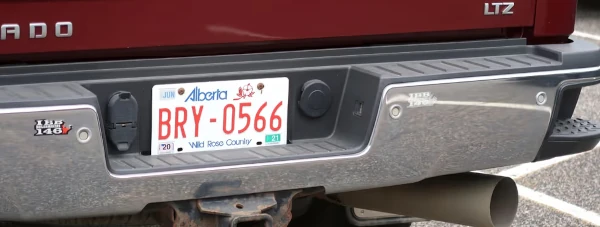
 In my current position I come across a large number of drivers who seem to live in British Columbia but have Alberta licence plates and insurance. The story goes that the driver works in Alberta and commutes back to British Columbia on their days off. Most of the time the family lives full time in BC, kids attend a BC school etc.
My questions are these:
By being able to show that they work in Alberta, does this negate their obligation to keep their BC driver's licence and ICBC insurance?
If they were to be involved in a collision, and their insurer in Alberta found out that they were actually living in BC, would this mean that the insurer would decline coverage and then they would in fact be uninsured?
If these people choose to improperly license and insure their vehicle do the police file charges and follow through?
Generally speaking, most of the issues seem to revolve around the test of being an “ordinary resident” of British Columbia, but I have been unable to find guidelines regarding employment in another province.
Who is a BC Resident?
Amendments were made to the Motor Vehicle Act at the beginning of 2022 to define who is a BC resident for driver and vehicle licensing purposes. BC residents are required to have a BC drivers licence and if they own a vehicle, licence and insurance from ICBC for it.
Who is an Alberta Resident?
Alberta's Traffic Safety Act does not define who is a resident of that province. A Google search finds this definition:
In Alberta, a resident for driver licensing purposes is someone who lives in the province, is legally entitled to be in Canada (citizen, permanent resident, or authorized worker/student), and uses an Alberta address as their primary home.
Financial Advantage
Today it appears that insurance costs are roughly equal between BC and Alberta when I looked at a 2025 Ford F150 pickup truck. In years past it could be considerably less expensive and this is why some people did not licence their pickup in BC when they were working in Alberta.
Financial Disadvantage
Unless you are licensing a commercial vehicle for business use, generally you have to be deceptive about your residency in order to license and insure it when you don't actually live there. This can have huge drawbacks if you cause a collision and your insurance company refuses to cover you because you have not been honest with them.
Police in BC
This was always a consideration when I was investigating a traffic violation. When there was sufficient evidence to justify charges a ticket was issued to the driver. The problem is more likely to be encountered when the BC driver lives near the Alberta border but it does happen throughout BC.
Share This Article
- Log in to post comments
Comments
Firstly, where insurance is involved (for sure with ICBC, and most likely with private insurance) if you are complying with the MVA of the jurisdiction where the vehicle is being operated, and likewise with the drivers’ licensing you should have no problem with insurance and obviously the same with police.
For driver’s licensing the key phrase is “ordinarily resident”.
For vehicles the key point is “used for touring purposes” and “began to operate the motor vehicle on a highway in BC”.
Some of the tests for where the owner / driver is “ordinarily resident” is the location where they claimed they lived on their income taxes, where they claimed they lived on their property taxes (for the home owner’s grant) and MSP.
The original poster asks “what is the RCMPs / Crowns appetite to file charges and follow through”.
The question is a consideration, HOWEVER, the big question is NOT if one could be charged, the HUGE question is what would happen to the validity of their insurance if the person was in an accident.
A few hundred dollar fine, at first blush might seem undesirable, but think of being at fault and smashing your $50,000 car/truck into a $40,000 other vehicle, and injuring two people in that vehicle to the tune of $100,000, only to find out that your small perceived savings on registering your vehicle, changing your license and insurance premium difference, has breached your insurance coverage in its entirety.
An insurance company facing a large payout will pull out all the stops to determine where you should have registered your vehicle.
The driver’s license issue isn’t as damning, especially with ICBC. Even if your driver’s license is expired, if there is no reason why you can’t obtain a driver’s license (ie, outstanding fine, prohibition etc) you will be given 10 days to obtain a driver’s license by ICBC.
Two sets of rules for the two issues.
- Driver’s license
- Vehicle registration/insurance.
For driver’s licensing, if you become “ordinarily resident” in BC, you have 90 days to obtain a BC Driver’s License.
The exemptions are:
- If you are “ordinarily resident” in another jurisdiction you have 6 months from the date you last entered BC to drive on that other jurisdiction’s DL.
- If you are a student registered at an approved school (the MVA provides a list of schools)
- Working in BC under an agreement is exempt for up to a year (ie, the above 6 month exemption plus 6 months)
For vehicles, the basic rule is once you are in BC for a purpose “other than touring” you have 30 days to register the vehicle in BC.
There are exemptions for members of the military and students.
In this case we are probably talking about persons working in AB and their family living in BC. IF Alberta has a similar rule as BC for driver’s licensing and I expect they would, if I work in Alberta, I can use my BC driver’s license for up to six months, while working in Alberta, and every time I come home to my family, the six month clock starts again.
- Log in to post comments
The validity of the insurance is more important