
 Question: Is it legal to have a nitrous oxide system hooked up to a vehicle in British Columbia? If the bottle is detached from the system, is it legal? Does a DOT/WHMIS oxidizer symbol grant any right to transport it?
Direct Answer: Nitrous Oxide Legality in BC
No, it is not legal to operate a vehicle equipped with a nitrous oxide system on BC highways, even if the bottle is detached. Under the 2025 Vehicle Inspection Manual, any vehicle found with an additional fuel system of a nitrous oxide type must be rejected by an inspector. A DOT or WHMIS oxidizer symbol simply serves as a hazard warning for emergency responders under the Transportation of Dangerous Goods regulations; it does not grant permission to bypass provincial vehicle equipment laws.
Nitrous Oxide and the 2025 Vehicle Inspection Manual
The Commercial Vehicle Safety and Enforcement (CVSE) branch enacted the updated 2025 Vehicle Inspection Manual. The new standards maintain strict rules regarding aftermarket performance fuel systems.
Exhaust System, Item 2h (j): Additional fuel system (nitrous oxide type or equivalent) — reject if installed or equipped or not of approved type for use on highway.
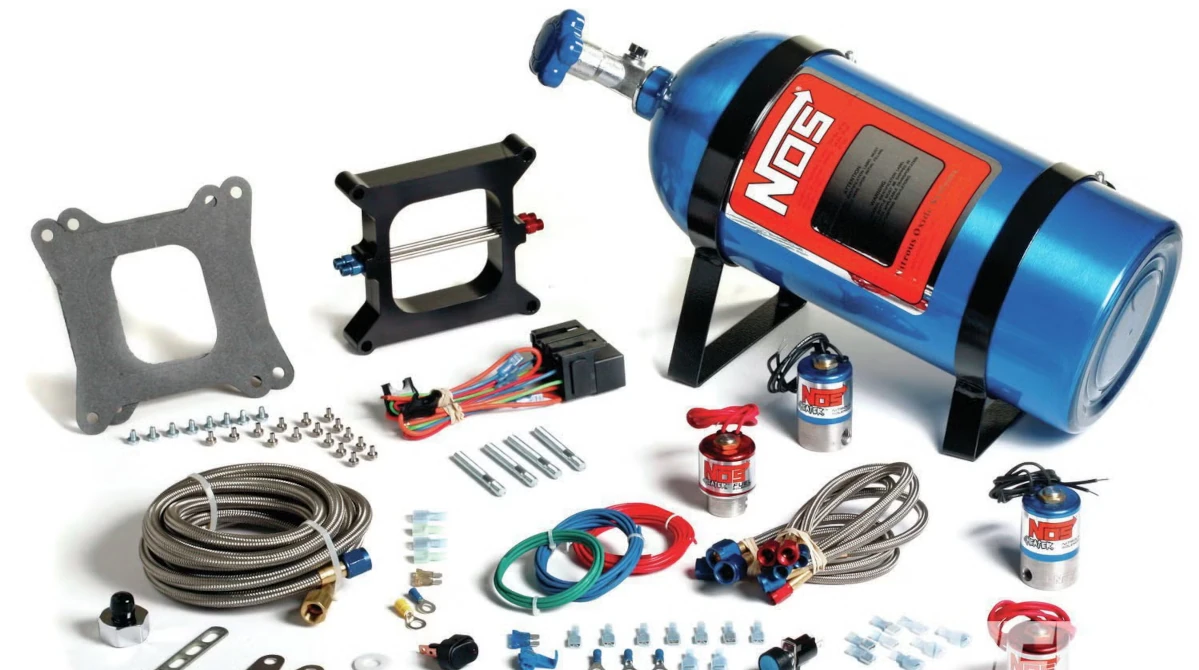
The phrasing "reject if installed or equipped" is absolute. The vehicle fails inspection if any component of the delivery system—such as solenoids, lines, or fogger nozzles—remains physically mounted to the engine or chassis.
Comparison: 2016 Manual vs. 2025 Manual
The core safety rule remains identical, but the context has shifted to the unified 2025 manual framework.
| Inspection Criteria | 2016 VIM Status | 2025 VIM Status |
|---|---|---|
| Nitrous Oxide System (NOS) | Rejected if installed | Rejected if installed |
| Detached Cylinder/Tank | Still fails inspection | Still fails inspection |
| Enforcement Consequence | Box 1 or Box 2 Notice & Order | Box 1 or Box 2 Notice & Order |
| Manual Validity | Repealed Sept 2, 2025 | Active Standard |
What Happens During a Roadside Enforcement Stop?
If a peace officer discovers a nitrous system during a roadside check, they will issue a Level 1 (Box 1) or Level 2 (Box 2) Notice and Order. This legally requires the owner to take the car to a Designated Inspection Facility (DIF).
- The Pass Condition: To pass the inspection, the vehicle owner cannot simply unscrew the bottle.
- Complete Removal Required: Every trace of the system must be entirely uninstalled from the vehicle.
- Inspector Mandate: Licensed inspectors must follow the active criteria to issue a valid Certificate of Approval.
The Role of DOT and WHMIS Compliance
A common misconception is that standard hazardous materials shipping labels legitimize a vehicle modification. A placard or label satisfies federal transport laws for containing high-pressure gases. However, it does not override the BC Motor Vehicle Act Regulations, which govern structural and mechanical requirements for highway safety.
Clear up the confusion about NOS legality. Pass this along.
- Log in to post comments