
Question: Some insurance companies use an app or other telematics technology to monitor how their customers drive and offer insurance discounts based on their driving behaviour. Is ICBC considering doing the same thing in British Columbia?
Yes, ICBC is considering it, but it has not announced a personal-driver insurance program based on telematics data. ICBC has been researching telematics for several years, and its current service plan says it is developing a plan for possible behaviour-based usage-based insurance.
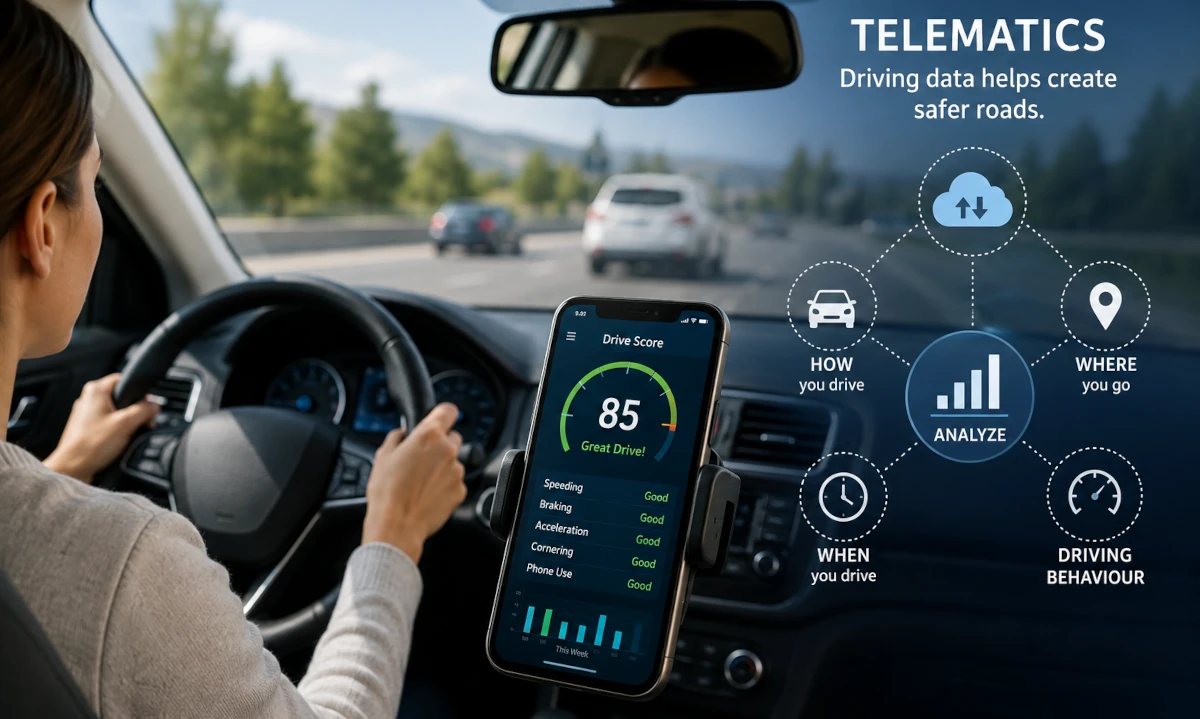
Telematics is the use of technology to collect information about how, when and where a vehicle is driven. Depending on the system, that can include information such as speed, acceleration, braking, cornering, distance travelled and the time and location of trips.
The idea is not new to ICBC. The corporation has already conducted research to determine whether drivers would accept telematics and whether providing drivers with information about their driving behaviour could make them safer.
ICBC's first telematics pilot
In 2018, ICBC recruited 139 volunteer drivers from its customer advisory panel for a three-month telematics pilot. The details of the project are documented in an ICBC briefing note released through the BC government's Open Information system.
The pilot tested technology that could monitor driving behaviour and, in one application, address handheld phone use while driving. ICBC was interested in whether drivers would adopt the technology, whether they believed it changed their driving and what concerns they had about its use.
An important point about this pilot is that ICBC did not have access to the individual driving data collected during the project. The data remained with the technology suppliers. The project was primarily an investigation of the technology and driver acceptance rather than an experiment in changing insurance premiums.
Then ICBC tested new drivers
ICBC's much larger Techpilot took the next step. Beginning in 2019, ICBC recruited newer drivers to determine whether telematics-based feedback could change driving behaviour.
Participants received feedback about behaviours such as speeding, rapid acceleration and harsh braking. Some participants also received incentives for safer driving, while a control group did not receive the same feedback during the study.
The results were interesting. According to ICBC's final Techpilot report, drivers receiving the telematics intervention had:
- 11% less rapid acceleration;
- 14% less harsh braking; and
- 8% less speeding.
The treatment group also had a lower crash rate per kilometre during the study. ICBC reported a 13% difference, but cautioned that the sample was too small to establish that telematics had caused the difference in crashes.
In other words, the research provided evidence that telematics-based feedback could change some driving behaviours. It did not establish that telematics would reduce crashes.
The drivers had concerns too
The Techpilot report is useful because ICBC did not simply report the positive results. Participants also identified problems and concerns with the technology.
Some participants questioned the accuracy and reliability of the information being reported by the telematics system. Others were concerned about what might happen to their data and whether it could eventually be used by ICBC or shared with third parties.
That raises an important issue. If driving behaviour is going to influence the price of insurance, the driver needs to be able to trust that the technology is accurately recording what happened.
It also matters what happens to the information after it is collected. Knowing that a device recorded your location, speed or braking is one thing. Knowing who can access that information, how long it will be retained and what it can be used for is another.
ICBC is already using telematics commercially
ICBC has since introduced a commercial fleet telematics program called Drive Smart Pro.
The Commercial Fleet Telematics Data Program Terms say that the information collected may include vehicle location, speed, acceleration and deceleration, cornering, trip times and distance travelled.
There is an important difference between this program and a personal-driver insurance rating system, however. Under the current commercial program, ICBC receives standardized and de-identified information rather than the personal information collected by the telematics provider. ICBC says the data from this program is not used for insurance rating or claims purposes.
That makes the commercial program an interesting step in ICBC's development of telematics, but it should not be confused with a system that individually prices a driver's insurance according to their driving behaviour.
What ICBC says today
ICBC's current service plan provides the clearest indication yet of where this research may be heading.
ICBC says it is exploring behaviour-based usage-based insurance programs that collect telematics data from vehicle use. It says that during 2026/27 it will develop a plan for possible behaviour-based usage-based insurance products.
According to ICBC, that work will consider the results and data from its commercial and new-driver pilots, additional research into telematics technology, the effect of education and incentives on driving behaviour, and the driving behaviours associated with unsafe driving.
Notice the wording: possible behaviour-based usage-based insurance products.
ICBC has not announced that it will introduce a personal-driver telematics insurance product, nor has it announced what such a product would look like. It has also not said whether participation in any future personal-driver program would be voluntary or mandatory. At this point, it is more accurate to say that ICBC is researching and planning for the possibility.
What could telematics-based insurance look like?
ICBC has not said exactly how a behaviour-based insurance program for personal drivers would work. Other Canadian insurers, however, already provide examples of how telematics can be used.
For example, some insurers use a smartphone app to measure driving behaviours such as speeding, braking, acceleration, the time of day a vehicle is driven and, in some cases, phone use. The information can be used to calculate a driving score and adjust the customer's insurance premium.
This doesn't mean that ICBC would use the same approach. An insurer can choose which behaviours to measure, how much weight to give each one and whether the result can only reduce a premium or can also increase it.
That is an important consideration for British Columbia drivers. If ICBC eventually introduces behaviour-based insurance, the details will matter: what information is collected, how accurately it is measured, how it affects the price of insurance, who can access the information and how long it is retained.
For now, ICBC is exploring behaviour-based usage-based insurance and developing a plan for possible products. Its research shows that telematics can influence driving behaviour, but the corporation has not yet announced what a personal-driver program would look like.
Learn More
- Log in to post comments