
Seatbelts have been required equipment in passenger vehicles for decades, but simply fastening one is not enough. A seatbelt must be worn properly to provide the protection it was designed to offer. An incorrectly positioned, loose or damaged belt may increase the risk of injury in a collision.
The basic rule is straightforward: wear the complete seatbelt assembly, adjust it to fit snugly, and keep it properly positioned whenever the vehicle is moving.

How to Wear a Seatbelt Correctly
A properly worn three-point seatbelt has two parts:
- The lap belt should lie low and snug across your hips, not across your abdomen.
- The shoulder belt should cross the middle of your chest and rest on your shoulder, away from your neck.
The belt should fit closely against your body, without excessive slack or twists. The lap belt is intended to restrain your pelvis, while the shoulder belt helps control the movement of your upper body. The stronger bones of the hips and shoulder are better able to withstand the forces involved in a collision than the soft tissues of your abdomen.
Adjust the seat and, where available, the shoulder belt height adjuster so the belt fits correctly. Your vehicle owner's manual explains the adjustment features and any specific instructions for your vehicle.
Common Seatbelt Mistakes
A seatbelt can be fastened and still be worn incorrectly. Avoid these common mistakes:
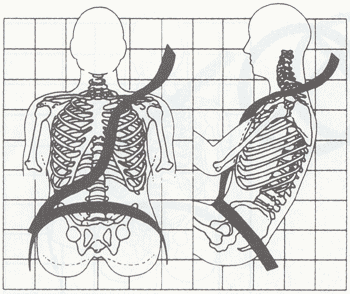
A loose belt allows too much forward movement before it begins to restrain you. This can increase the chance of striking the steering wheel, dashboard or other parts of the vehicle.
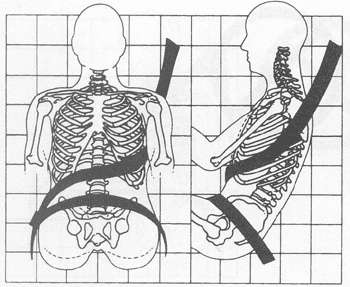
Never tuck the shoulder belt under your arm. This places collision forces on the ribs and internal organs instead of distributing them across the shoulder and chest. It can also allow excessive upper-body movement.
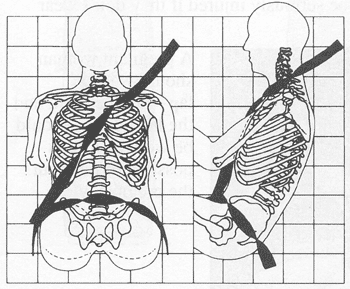
A twisted belt does not distribute collision forces across its full width. Straighten it before driving.
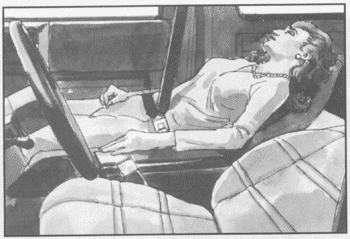
Do not recline your seat excessively while the vehicle is moving. The lap belt may ride up onto your abdomen, and you may slide beneath it during a collision. Sit reasonably upright with your back against the seat.
Seatbelts and Pregnancy
Pregnant occupants should continue to wear a seatbelt. The lap portion should be positioned low beneath the abdomen, snug across the hips and pelvic bones. The shoulder portion should cross the chest between the breasts and to the side of the abdomen.
Never place the shoulder belt behind your back or under your arm to make room. Proper seatbelt use helps protect both the pregnant occupant and the developing child.
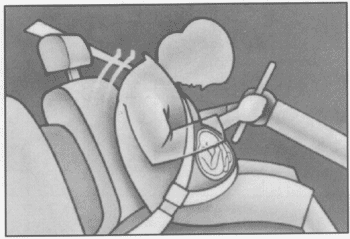
The seatbelt illustrations on this page are © General Motors of Canada and are used with permission.
Seatbelts and Airbags Work Together
An airbag is a supplemental restraint system, not a replacement for a seatbelt. It is designed to work with the seatbelt to help protect an occupant in a collision.
The seatbelt helps keep you in the proper position as the airbag deploys. Without it, you may move too close to the airbag before it inflates. An airbag deploying against an occupant who is out of position can cause serious injury.
Children must be properly restrained in an appropriate child restraint or booster seat. Never place a rear-facing child restraint in front of an active frontal airbag. Follow the vehicle and child-restraint manufacturers' instructions concerning seating positions and airbags.
Everyone in the vehicle needs to wear a seatbelt, including passengers in the rear seats. Each occupant must have their own seatbelt. Never try to restrain two people with one belt. An unrestrained occupant can be thrown around the vehicle and may injure themselves or someone else.
The following crash test demonstrates the difference between belted and unbelted occupants:
Inspecting and Maintaining Seatbelts
Seatbelts are safety equipment. Check them periodically for cuts, fraying, torn stitching, damaged buckles or other signs of wear. Make sure the buckle latches securely and the belt retracts and extends normally.
Do not attempt to repair damaged seatbelt webbing yourself. If a belt is damaged, have it inspected and replaced as necessary according to the vehicle manufacturer's instructions.
A seatbelt that has been involved in a collision may need replacement even if there is no obvious external damage. Check the owner's manual or ask the vehicle manufacturer or dealer what inspection and replacement procedures apply after a collision.
Avoid aftermarket devices or attachments that change the way a seatbelt fits or operates unless the vehicle manufacturer confirms that they are appropriate for your vehicle. Do not alter the belt, buckle or retractor.
Buckle Up Before Moving
Fasten your seatbelt and make sure your passengers are properly restrained before moving the vehicle. Do not wait until you are underway or try to buckle up while driving. This is an unnecessary distraction at a time when your attention should be on controlling the vehicle.
British Columbia's Motor Vehicle Act, section 220, sets out the requirements for wearing a seatbelt assembly. The complete assembly must be properly adjusted and securely fastened, subject to the exemptions provided by law.
Learn More
- Log in to post comments
Comments
Ever notice how many passengers (usually female), like to put their feet up on the dashboard while riding? I saw a video of a passenger side airbag deployed with two 4 x 4s on the dash, other ends on the seat. In the crash, both pieces of lumber were shattered and forced through the windshield by the airbag. Am now on a personal crusade with friends and family to avoid that habit - comfortable though it may be.
- Log in to post comments
Bad Passenger Habits