
Imagine approaching a cyclist riding near the right edge of the highway. You check for traffic, decide it is safe to move left to give the cyclist more room, and begin steering away from them. Suddenly, your vehicle applies steering input in the opposite direction, trying to guide you back toward the right.
You weren't drifting out of your lane. You were deliberately moving away from a vulnerable road user. Yet your vehicle interpreted your actions as an unintended lane departure.
This is one of the potential problems with modern lane-keeping assistance systems. Technology intended to help drivers stay in their lanes can sometimes interfere with a deliberate manoeuvre made for safety.
Understanding how these systems work, when they intervene and how to manage them is becoming an important part of driving.
Three Different Lane Assistance Systems
The names manufacturers use for driver assistance features can be confusing. Several systems perform related but distinctly different functions.
Lane Departure Warning (LDW) monitors the vehicle's position relative to lane markings and alerts the driver when the vehicle approaches or crosses a line unintentionally. Warnings may be visual, audible or tactile, such as a vibration through the steering wheel or driver's seat. The system does not normally apply corrective steering.
Lane Keeping Assist (LKA) goes a step further. If the vehicle begins to drift toward or across a lane marking without an apparent intention to change lanes, the system may apply corrective steering or braking to help keep the vehicle within its lane.
Lane Centering Assist (LCA) provides more continuous steering assistance intended to keep the vehicle near the centre of its lane. It is sometimes combined with adaptive cruise control as part of a more comprehensive driving assistance system.
These systems are not designed to replace the driver. The driver remains responsible for steering, maintaining awareness and controlling the vehicle.
Why Does the Vehicle Steer Against You?
Most lane assistance systems use a forward-facing camera to recognize lane markings and monitor the vehicle's position relative to them.
Many lane assistance systems interpret movement toward a lane marking without an activated turn signal as an unintended departure. Depending on the vehicle, the system may issue a warning, apply corrective steering or use braking to influence the vehicle's direction. Some systems also recognize deliberate steering input as an indication that the driver intends to move.
Transport Canada explains how lane-keeping assistance works, including the use of corrective steering or braking when a vehicle begins to drift outside its lane without a turn signal. It also confirms that drivers can override the assistance when necessary.
This is where the technology can conflict with defensive driving.
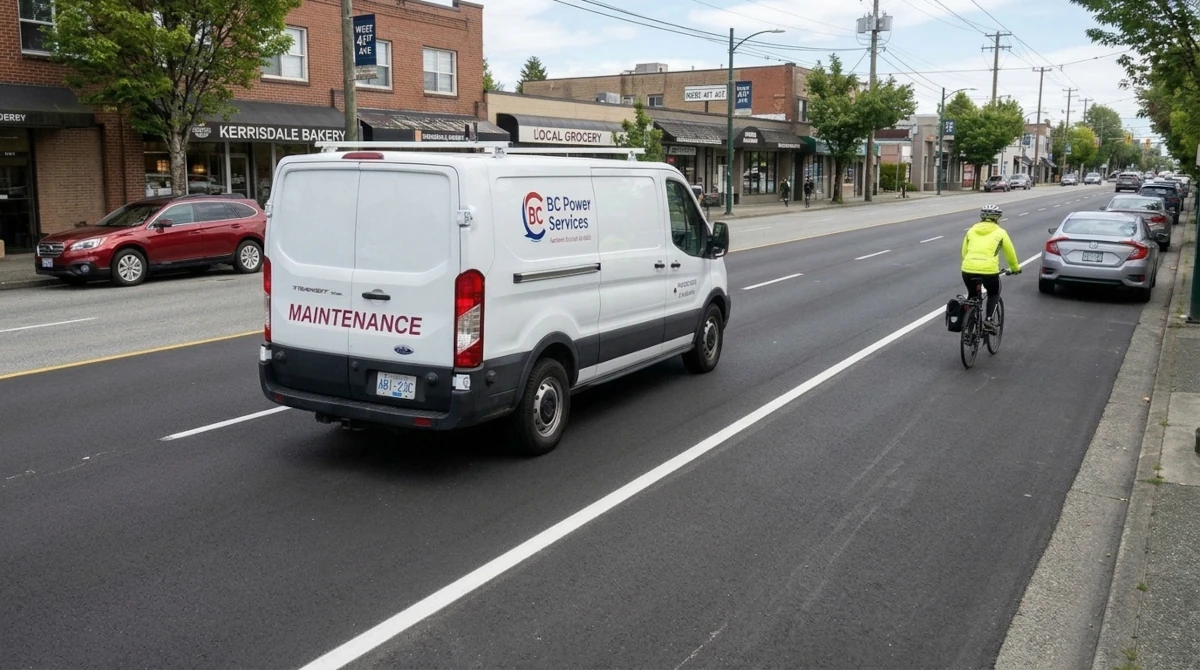
A driver might move left within their lane to avoid a pothole, give a cyclist additional clearance or provide room when passing a disabled vehicle. The movement is intentional and may be the safest choice, but the system may interpret it as an unintended departure.
The Importance of Turn Signals
A turn signal does more than satisfy a legal requirement when changing lanes. It communicates intentions to other road users.
Consider the cyclist passing example. A driver may have enough room to move left within their existing lane without crossing the lane marking. Although the law does not necessarily require a signal for this movement, activating the left turn signal can be a useful defensive driving practice.
It tells drivers approaching from behind and traffic in the adjacent lane that you intend to move toward their space. They can anticipate your movement instead of being surprised by it and possibly taking unnecessary evasive action.
It may also tell the vehicle's lane assistance system that the movement is intentional.
Transport Canada explains that lane-keeping systems generally distinguish an intended lane change from an unintended departure, including through the use of a turn signal. However, the precise response depends on the vehicle and its system.
Do not assume that every vehicle will behave identically. Consult the owner's manual to learn how your particular system responds.
Passing Vulnerable Road Users
Moving left to give a cyclist more room is a common example of a deliberate movement that may be misinterpreted by lane-keeping assistance. The legal requirements for following and passing cyclists and other vulnerable road users in British Columbia are explained in Following and Passing Vulnerable Road Users in B.C.
What Can Drivers Do?
If your vehicle has lane assistance technology, take the time to understand what it does and how it behaves.
- Read the owner's manual to learn which lane assistance features are installed and how they operate.
- Find out whether your system provides warnings only or can apply corrective steering.
- Learn how to override steering assistance if it conflicts with a necessary manoeuvre.
- Find out whether the system can be adjusted to provide warnings without steering intervention.
- Learn how to temporarily disable the system if necessary and how it is reactivated.
- Keep the cameras and sensors clean and unobstructed.
Lane assistance systems also have limitations. Faded or missing lane markings, road construction, temporary markings, snow, sharp curves and direct sunlight can interfere with their ability to recognize the roadway correctly.
Consumer Reports discusses these issues in its Guide to Lane Departure Warning & Lane Keeping Assist. It recommends that drivers learn how their vehicle's system works, understand its limitations and take an extended test drive to become familiar with its behaviour.
The Driver Is Still Responsible
Driver assistance technology can be useful. Lane departure warnings may alert a distracted driver to an unintended drift, and corrective steering may help prevent a collision.
However, these systems do not necessarily understand why a driver needs to move within a lane. They recognize patterns and respond according to their programming. They may not appreciate that a pothole, cyclist, pedestrian or disabled vehicle makes a change in position desirable.
Drivers should not surrender their judgment to these systems. Learn how your vehicle responds, use signals to communicate your intentions, and know how to override assistance when a safe driving manoeuvre requires it.
Technology should assist good driving, not get in its way.
- Log in to post comments