
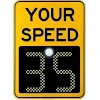
 You see them everywhere across British Columbia: bright digital signs in school zones, construction corridors, and municipal transition zones flashing your exact speed back at you. When these roadside speed reader displays—technically known as Speed Display Devices (SDDs) or Driver Feedback Signs—first began popping up on B.C. highways, traffic engineers openly questioned their long-term viability. Would the novelty wear off once local drivers grew accustomed to them?
Nearly fifteen years of Canadian traffic data and updated engineering frameworks have answered that question. These devices are not just a temporary gimmick; they are a cost-effective, permanent traffic-calming tool.
The Proven Long-Term Impact
The early trials suffered from a lack of longitudinal data. Today, organizations like the Transportation Association of Canada (TAC) have synthesized Canadian field studies.
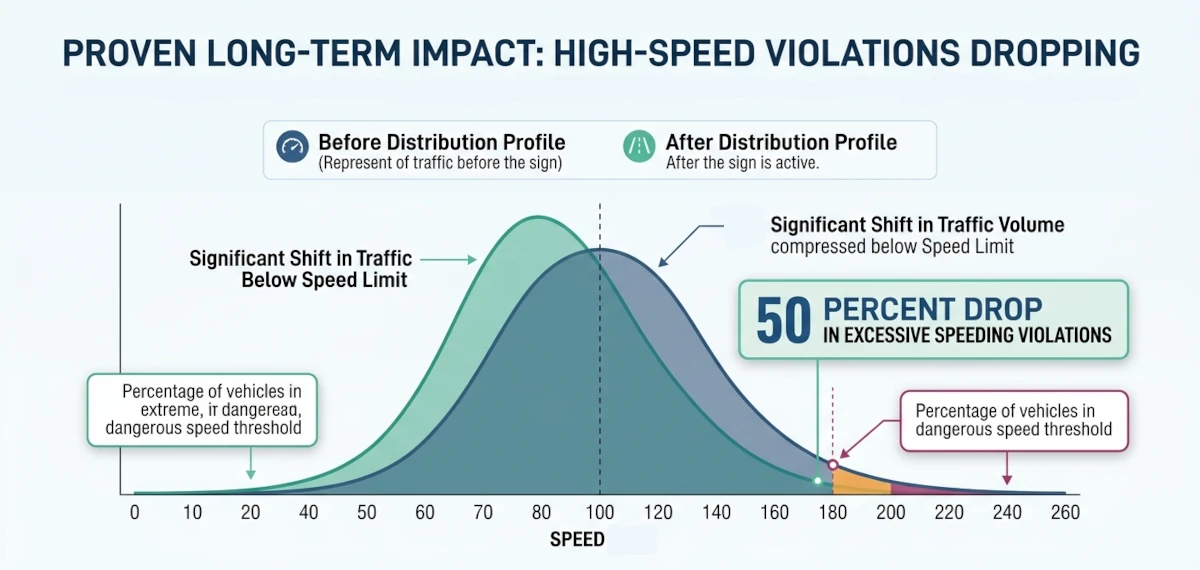
The consensus is clear: speed reader boards consistently reduce average vehicle speeds by 2 to 7 km/h. More importantly, long-term evaluations show that they cut the number of high-speed violators (those travelling more than 10 or 15 km/h over the limit) by up to 50%. Crucially, Canadian municipality tracking confirms this effect does not fade over time; the speed reductions remain stable years after installation.
The Psychology of Immediate Feedback
Why do these signs work so well when a static speed limit sign is routinely ignored? The answer lies in behavioural conditioning and addressing driver inattention.
Static signs provide a passive instruction, but speed reader boards create an immediate, active feedback loop. Drivers often speed unintentionally due to vehicle insulation, highway hypnosis, or simple distraction. By projecting the driver’s specific speed in real-time, the sign breaks their cognitive autopilot. It forces an instant self-assessment, leveraging mild social pressure—the sudden awareness that pedestrians and nearby drivers now know exactly how fast you are going.
Modern Technical Evolutions
The technology inside these displays has evolved significantly, aligning with modern Canadian engineering standards and municipal guidelines:
- The Multi-Stage Display: Modern Canadian signs utilize structured display stages. While compliance displays a neutral speed, moderate speeding triggers a flashing display or text alerts like "SLOW DOWN". Some municipal signs even deploy frowning or smiling emojis, utilizing emotional cues that the human brain processes faster than text.
- The "Anti-Racing" Blanking Feature: A common concern among B.C. motorists was that reckless drivers would use the signs to "test" their vehicle's speedometer or race the display. To prevent this, provincial guidelines outline maximum threshold limits. If a driver exceeds the speed limit by an extreme, dangerous margin, the screen goes completely blank. It refuses to reward, track, or calibrate extreme speeding.
- Stealth Data Logging: While the front of the sign interacts with drivers, the internal processor functions as a tool for the MOTT. Many modern units double as traffic data loggers. They record vehicle counts, peak speeding times, and overall compliance rates 24 hours a day—even when the digital display is deactivated.
Balancing Technology and Engineering
Speed reader displays are highly effective at localized areas, but they are not a silver bullet for systemic road design issues. They function best as transitional warnings—alerting a driver that a high-speed highway or rural road is shifting into a dense construction zone, residential area, or school drop-off point.
To dig deeper into how these radar systems function in heavy traffic, check out our Q&A on How Accurate Are Speed Reader Boards?.
For a look at how emotional feedback can be taken to the next level, view the Quebec SAAQ Living Radars Video campaign, which literally puts a human face on school zone speeds.
Ultimately, slowing down by even a few kilometres per hour significantly lowers kinetic impact forces during a collision. For more on the math behind this safety threshold, read our analysis on Speeding as the Best Predictor of Crash Risk.
Did this update change how you view driver feedback signs?
Help make our B.C. roads safer by sharing this research with your neighborhood group, school PAC, or fellow drivers using the buttons below.
- Log in to post comments