Slow Driving in BC: How Slow Is Too Slow?
 Question: Is it legal to drive below the posted speed limit in British Columbia? How much below the limit can you drive before you are considered to be driving too slowly?

Information related to vehicle speed and speeding.
Question: Is it legal to drive below the posted speed limit in British Columbia? How much below the limit can you drive before you are considered to be driving too slowly?
 Question: Is there a section in the Motor Vehicle Act that states that, in the absence of speed signage on a highway, a driver must use common sense to judge what a safe speed would be?
 A common question from drivers who receive a speeding ticket is whether police must use radar or laser to prove that they were speeding. A British Columbia appeal decision shows that radar or laser is not always required. Under the right circumstances, a court may accept a police officer’s visual estimate of speed as evidence. Under the right circumstances, a court may accept a police officer’s visual estimate of speed as evidence.
 Question: Friends of my parents were returning from Vancouver to Kelowna after a hockey tournament when they were stopped for speeding. They were travelling at 124 km/h in an 80 km/h zone—44 km/h over the posted speed limit.
 The article that I wrote two weeks ago concerning solving your own road safety problems prompted an inquiry from the East Kootenays. The writer complained that a section of Highway 31A leaving the town of New Denver was marked with a 50 zone ends speed sign and the next kilometre or so of the road had many driveways, some intersections, a pedestrian crossing for a public trail and was regularly used by cyclists and pedestrians.
 When residents become concerned about speeding in their neighbourhood, one suggestion almost always comes up: "Why doesn't the city install speed bumps?" It seems like a simple, inexpensive solution.
 Speed limits exist to improve safety, yet many drivers feel pressure to exceed them. During one week I heard from three drivers facing very different situations: one was being pressured by an employer to speed, another felt unsafe obeying the speed limit because everyone else was driving faster, and a third admitted speeding and wanted advice about disputing a ticket. Together, their stories illustrate the everyday pressures that encourage otherwise responsible drivers to break the law.
 Question: I loaned my vehicle to my girlfriend while I was out of the province. She was caught excessively speeding, received a traffic ticket (officially called a violation ticket), and my vehicle was impounded for seven days. I wasn't even in British Columbia at the time, but now I can't get to work because my vehicle is in the impound lot. How can I be responsible for something I didn't do?
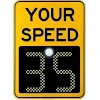 You see them everywhere across British Columbia: bright digital signs in school zones, construction corridors, and municipal transition zones flashing your exact speed back at you. When these roadside speed reader displays—technically known as Speed Display Devices (SDDs) or Driver Feedback Signs—first began popping up on B.C. highways, traffic engineers openly questioned their long-term viability. Would the novelty wear off once local drivers grew accustomed to them?
 My highway patrol unit was issued its first laser speed measuring device back in the early 1990s. It quickly became a popular enforcement tool due to its precision in targeting specific vehicles and measuring speed accurately. Just like radar before it, laser technology required time for case law to mature in the courtroom.