
 Deaf drivers are handicapped because they may miss auditory cues like sirens, horns, or engine sounds. This often results in heightened reliance on vision causing fatigue, but many develop strong visual skills and use technology to compensate. This often makes them safer drivers.
Circumstances of the Collision
The collision in this story occurred at the intersection of Ferry Avenue and Highway 16 West in Prince George. A member of the RCMP was responding to a rollover collision with injuries when he proceeded through a red light at low speed and collided with a car driven by a deaf person. The new driver passed by other traffic that was stopped to allow the police vehicle to clear the intersection.
Duty of Care for Deaf Drivers
As you would expect, Justice Meiklem looks at negligence on the part of the police officer.
What is also interesting is the description of the duty of care that deaf drivers have in relation to entering the intersection when they cannot hear sirens.
It is not negligent for a deaf person not to hear a siren. But a deaf person driving a car must reasonably be aware that their own safety and the safety of other motorists might be affected by that disability if reasonable compensations are not made. Visual attentiveness takes on added importance.
In my view, it is incumbent upon a driver with a known profound hearing impairment to compensate for the obvious inherent risks of not being able to hear emergency vehicles sirens by learning to pay special attention to visual clues of the presence of an emergency vehicle, such as vehicles stopping or not proceeding on a green light. This is not requiring a higher standard of care of deaf persons, but rather requiring a specific component of reasonable care in specific circumstances.
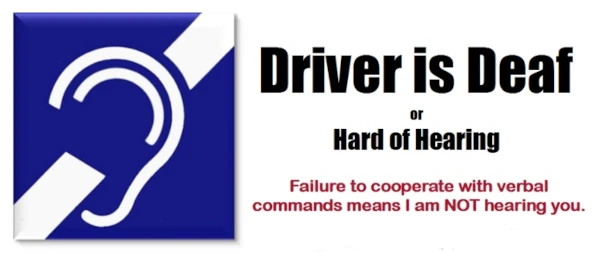
Placard for Emergency Responders
Learn More
Share This Article
- Log in to post comments