
This article began with a question from a DriveSmartBC visitor about the lack of routine mechanical inspections for passenger vehicles in British Columbia. The visitor compared BC's approach with that of countries such as the United Kingdom, where vehicles must undergo periodic safety inspections.
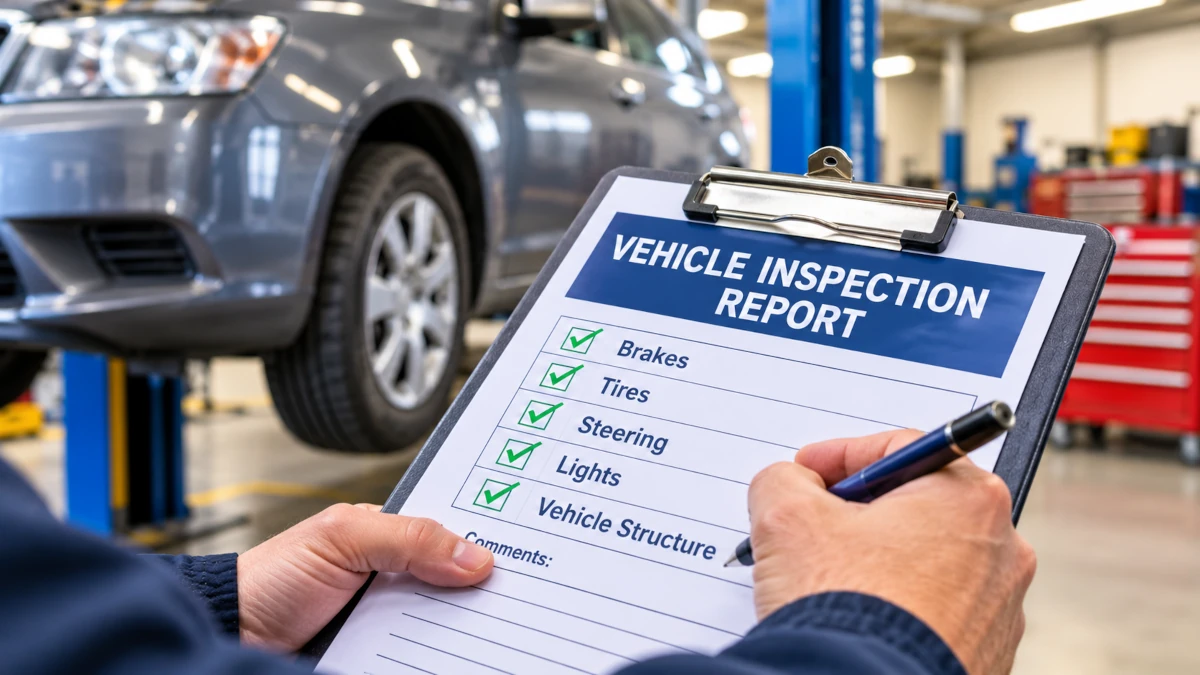
The visitor suggested that inspections establish a minimum standard for vehicle condition by identifying problems with brakes, tires, steering, lights and vehicle structure. While recognizing that inspections add to the cost of owning a vehicle, the visitor questioned whether requiring them might help ensure that vehicles meet a reasonable standard when used on public roads.
The contribution also recognized some limitations. Vehicles can deteriorate between inspections, owners may attempt to defeat the purpose of testing, and providing inspection facilities in remote communities presents practical challenges. The visitor did not claim that mandatory inspections would necessarily reduce collisions, but raised the broader question of whether ensuring a minimum standard of vehicle condition is worthwhile.
British Columbia's Vehicle Inspection History
British Columbia once operated government vehicle inspection stations in the metropolitan Vancouver area, Victoria and Nanaimo. The mandatory inspection program was discontinued in 1983. The government subsequently developed a province-wide inspection program with an emphasis on commercial vehicles.
Today, the vehicle inspection program is privately delivered and regulated by the Ministry of Transportation and Transit through Commercial Vehicle Safety and Enforcement (CVSE). Authorized inspectors work at designated inspection facilities throughout the province.
The program includes both commercial and private vehicle inspections. However, ordinary passenger vehicles are not subject to routine periodic mechanical inspections simply because they are being driven on B.C. highways.
The Private Vehicle Inspection Program applies in particular circumstances, including vehicles imported into B.C., vehicles rebuilt from salvage, certain modified or reconstructed vehicles and vehicles ordered to undergo inspection.
The CVSE Vehicle Inspections and Standards program provides further information about the current system.
Commercial Vehicle Inspections
Commercial vehicles are subject to more extensive inspection requirements. Depending on the type, weight and use of the vehicle, inspections may be required annually or semi-annually under the Commercial Vehicle Inspection Program (CVIP).
These requirements are part of a broader approach to commercial vehicle safety. Carriers must maintain their vehicles, conduct required trip inspections and ensure that vehicles meet applicable safety standards. Commercial vehicles may also be examined at roadside inspection stations or during mobile enforcement operations.
The requirements recognize that larger vehicles, passenger-carrying vehicles and vehicles used intensively in commercial operations present particular safety concerns.
Police Inspection of Vehicles
The absence of periodic inspections for ordinary passenger vehicles does not mean that a vehicle can be operated in any condition.
Section 219 of the Motor Vehicle Act requires vehicles operated on highways to be equipped in compliance with the Act and its regulations. Subsection 219(2) authorizes a peace officer to require a vehicle owner or person in charge of a vehicle to permit an inspection. It also allows the officer to require the vehicle to be moved to a designated location for inspection by the officer or presented for inspection by an authorized inspector at the person's expense.
Section 7.08 of the Motor Vehicle Act Regulations specifically requires the owner, lessee or person in charge of a motor vehicle or trailer operated, or about to be operated, on a highway to take it immediately to a location designated by a peace officer when requested, and submit it there for inspection and testing.
Section 25.30 of the Motor Vehicle Act Regulations provides a further power. When a peace officer has reasonable and probable grounds to believe that a vehicle is unsafe for highway use because of a mechanical, structural or other defect, the officer may order the owner, lessee or operator to remove it from the highway and keep it off the highway until specified repairs have been completed or the order is revoked. The officer may also require the vehicle licence or number plates to be surrendered.
These provisions allow police to deal with vehicles that are unsafe without requiring every vehicle to undergo an annual inspection.
What Other Countries Require
Many countries require periodic mechanical inspections of passenger vehicles. The United Kingdom requires annual MOT testing once a vehicle reaches three years of age, while European Union rules generally require inspections four years after registration and every two years thereafter. Japan and New Zealand also operate mandatory inspection programs.
Whether these programs make roads safer is less certain.
Research in Norway found that periodic inspections reduced mechanical defects but did not produce a measurable reduction in passenger vehicle collisions. A Japanese study similarly found little evidence that accident rates declined following mandatory inspections.
Research from New Zealand reached a different conclusion. A study examining injury and fatal crashes in Auckland found that vehicles without a current Warrant of Fitness had significantly greater odds of being involved in such a crash. However, the researchers established an association, not proof that the inspection requirement itself prevented collisions.
A 2021 systematic review of international research examined more than 5,000 references but found only six studies suitable for evaluating the relationship between periodic vehicle inspections and road crashes. The results were mixed, with some studies finding modest reductions in crashes and others finding no measurable benefit.
The researchers concluded that periodic inspections might be associated with a small reduction in collisions, but there was insufficient evidence to establish that inspections themselves caused the reduction.
New Zealand is also reducing inspection frequency for some vehicles. From November 1, 2026, eligible light vehicles aged 4–14 years are moving from annual to biennial Warrant of Fitness inspections. The change is being phased in: vehicles first registered on or after November 1, 2019 are eligible from November 2026, while vehicles first registered between November 1, 2013 and October 31, 2019 become eligible in November 2027. The government cites improvements in vehicle safety and reliability as the reason for the change.
The New Zealand Transport Agency's explanation of the inspection changes provides further details.
The international experience suggests that inspections can improve vehicle condition, but the extent to which they reduce collisions remains uncertain.
Further reading:
- Norwegian research on periodic vehicle inspections and accidents
- Japanese research on vehicle inspections and accident rates
- New Zealand research on vehicle inspections and crash injuries
- 2021 systematic review of vehicle inspections and road crashes
The Cost of Mandatory Inspections
Any proposal to introduce periodic inspections for all passenger vehicles in British Columbia would have to consider more than the cost of the inspection itself.
Vehicle owners would pay for the inspection and any repairs necessary to pass. Government would have to administer and monitor the program, while inspection facilities would need sufficient capacity to handle the additional workload.
Access could also be a problem in rural and remote communities where there may be few inspection facilities. A system that works well in a large urban centre might be inconvenient and expensive for someone living a considerable distance from the nearest authorized facility.
There is also a limitation inherent in any periodic inspection. A vehicle that passes today may develop a dangerous defect tomorrow. An inspection certificate is evidence of the vehicle's condition at the time of testing, not a guarantee of its continuing roadworthiness.
My Experience
In my own experience as a police officer and collision investigator, mechanical defects were identified as a contributing factor in relatively few collisions in British Columbia.
There is a qualification to that observation. Mechanical defects can be difficult to identify after a collision. A driver error may be more apparent during an investigation, even when a mechanical problem contributed to the driver's loss of control or inability to avoid the collision.
Nevertheless, the research from other countries reinforces the difficulty of demonstrating that periodic inspections of every passenger vehicle produce a substantial reduction in collisions.
I can see the benefit of ensuring that vehicles meet minimum mechanical safety standards. I also recognize that inspections can identify problems that an owner might otherwise overlook. However, the financial and administrative costs of a universal inspection program need to be justified by evidence of a meaningful safety benefit.
If I had to choose between requiring every driver to pay for regular mechanical inspections and directing additional resources toward driver education, training and testing, I would want to see the benefits of the latter considered very carefully first.
Learn More
- Roadside Mechanical Inspections – How police conduct roadside mechanical inspections and decide what enforcement action is appropriate.
- Notice & Order #1 – Used for serious defects requiring immediate removal of the vehicle from the highway and a passed inspection before it can return to service.
- Notice & Order #2 – Requires an inspection at a Designated Inspection Facility and submission of a passed inspection report within 30 days.
- Notice & Order #3 – Addresses defects requiring correction and presentation of the vehicle as directed by the officer.
- Log in to post comments