
Road safety affects everyone who uses British Columbia's roads. During an election campaign, voters should be able to find out what the parties seeking to form government intend to do to prevent collisions and reduce deaths and serious injuries.
For the 2026 provincial election, I sent the same question to five major political parties, using the contact information listed on the Elections BC website. I asked whether their election platforms contained specific road-safety commitments or, if their platforms were not yet public, whether they could provide a brief statement of their priorities for the issue.
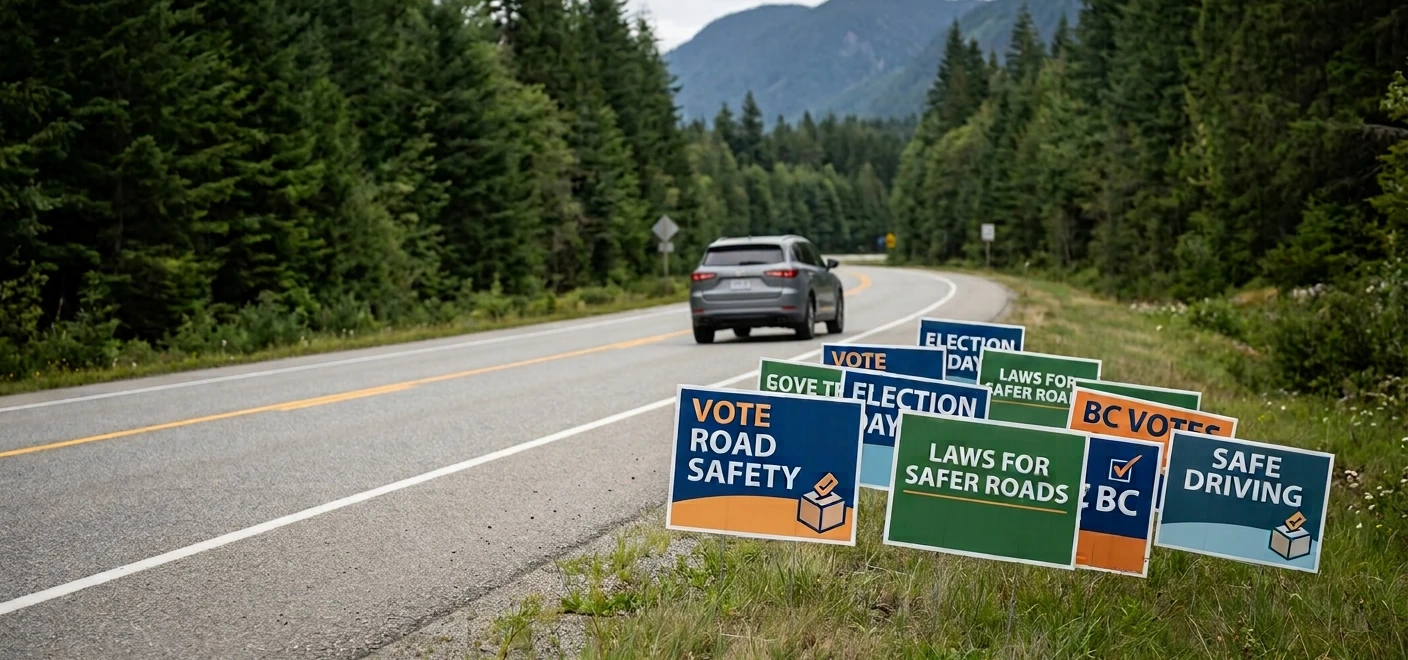
I followed up with parties that did not respond. Only the BC NDP provided a direct response. I also examined publicly available platform material where it was relevant, including the BC Green Party's platform.
My interest was in what the parties proposed to do next, not simply a list of road-safety programs already in place. I wanted to identify their priorities and, where possible, the specific commitments they were prepared to make to improve safety on BC roads.
What the BC NDP told me
The BC NDP's response described several road-safety initiatives, but distinguishing new commitments from existing programs is important when assessing what a party is promising for the next term.
The letter referred to increased financial penalties and longer driving bans for high-risk behaviours, including excessive speeding and distracted driving. It also described consistent Class 4 operator training requirements for taxi, chauffeur and ride-hailing services.
However, the province's own BC Road Safety Strategy already identifies both the increased penalties and the consistent Class 4 training requirements among measures introduced by the government. They should therefore not be presented as new commitments for the next term.
The response also referred to a new Motorcyclist Licensing Program for all new motorcycle riders, intended to reduce motorcycle-related deaths and serious injuries. The province has already announced this initiative, with regulatory changes scheduled to take effect in 2027. It is therefore an existing government commitment under development, rather than an entirely new proposal for the next term.
Much of the remainder of the response described existing programs or work already underway, including the replacement of 140 intersection safety cameras, mandatory entry-level training for new commercial drivers, commercial vehicle inspections, the overheight-detection system in Abbotsford and the Vision Zero Grant Program. The NDP also said it would continue implementing the 2025 Road Safety Strategy.
These initiatives may contribute to road safety, but describing them does not establish what additional measures a future government would introduce. The response did not set out a broader package of clearly new collision-prevention commitments, specific targets for reducing deaths and serious injuries, or details about how progress would be measured during the next term.
What about the other parties?
The other parties I contacted did not provide a direct response, despite follow-up inquiries. I cannot say why they chose not to respond, and their silence does not establish that they have no road-safety policies.
Parties may publish commitments in their platforms or announce proposals during the campaign. Voters can and should examine those materials, but a direct response would have provided an opportunity to ask about priorities, implementation and measurable results.
What I found in the BC Green platform
Although the BC Green Party did not respond directly to my inquiry, I reviewed its published 2026 election platform.
The platform includes proposals concerning transportation, public transit and cycling. It also addresses the treatment and support of people injured in motor vehicle collisions through changes to the province's insurance system.
On page 11, the party proposes continuing the no-fault insurance model, amending the legislation governing ICBC to clarify that all reasonable costs related to an accident are covered, and re-establishing a Special Committee to Review Provisions of the Insurance (Vehicle) Act.
These insurance proposals focus on what happens after a collision. The platform's transportation proposals address broader questions about how people travel, including making cycling safe and accessible. However, in the material I reviewed, I did not find a comparable set of specific commitments directed at preventing collisions or reducing traffic deaths and serious injuries.
Road safety includes both preventing collisions and ensuring that people injured in them receive appropriate support. Voters should be able to assess a party's approach to each.
Questions voters should be asking
Whether a party responds to an inquiry or publishes its proposals in an election platform, voters deserve enough information to evaluate its road-safety plans. Useful questions include:
- Reducing deaths and serious injuries: What specific measures will the party introduce to reduce the number of people killed or seriously injured on BC roads?
- Enforcement: What will it do to address speeding, distracted driving, impaired driving and other dangerous behaviours? How will it measure the results?
- Road and intersection design: What improvements will it support on highways and in communities where collisions and serious injuries are a concern?
- Vulnerable road users: How will it improve safety for pedestrians, cyclists and motorcyclists?
- Licensing and training: What changes, if any, will it make to driver training, licensing, assessment and commercial vehicle safety?
- Accountability: What targets will it set, what information will it publish, and how will the public know whether its policies are working?
Broad statements about making roads safer are easy to make. Specific commitments, timelines and publicly reported results make it possible to judge whether a government is delivering on them.
Road safety deserves a clear answer
Preventing deaths and serious injuries on BC roads requires more than general promises to improve safety. Voters deserve to know what each party intends to change, when those changes will happen, and how the results will be measured. With road safety affecting everyone, these are reasonable questions to expect anyone seeking to form the next provincial government to answer.
Learn More
- Log in to post comments