
 In British Columbia, the authority of a peace officer during a traffic stop is broad, grounded in both provincial safety statutes and federal criminal law. While the Charter of Rights and Freedoms protects against arbitrary detention, the courts have consistently ruled that the state's interest in road safety justifies certain "reasonable limits" on those rights.
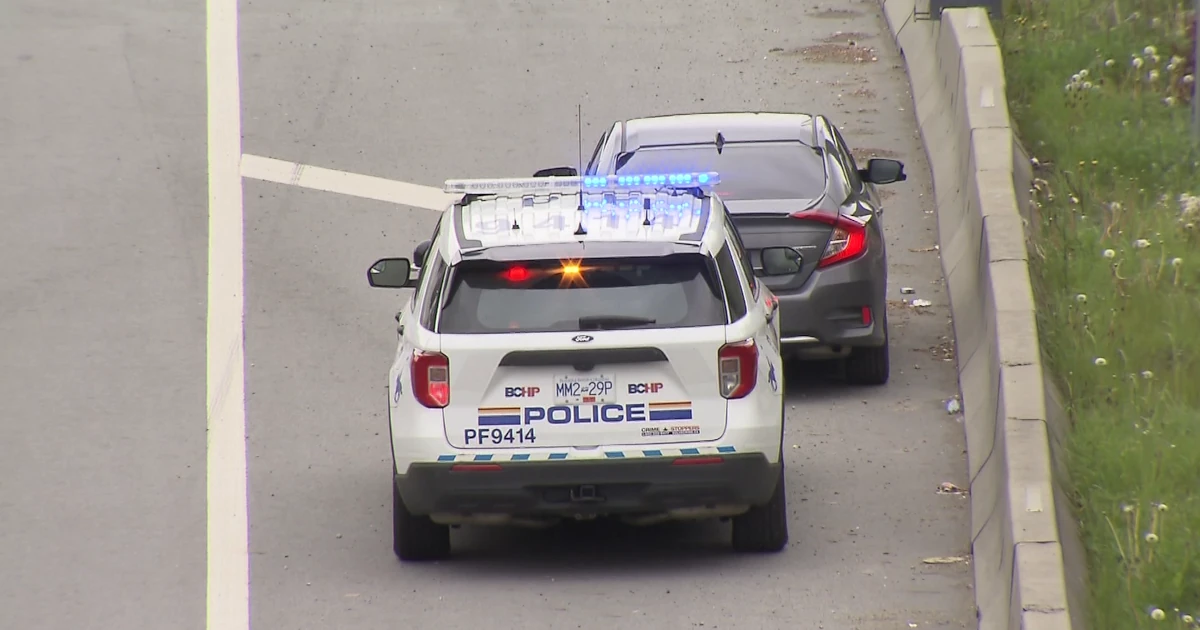
The Power to Stop (Section 73 MVA)
Police in BC possess the statutory power to stop any vehicle operating on a highway at any time.
No "Reasonable Suspicion" Required: An officer does not need to witness a driving error to pull you over. They may stop a vehicle specifically to verify:
- The driver is properly licensed.
- The vehicle is registered and insured.
- The vehicle is in a safe mechanical condition.
The Scope of "Highway": This power generally applies while the vehicle is on a "highway" (which includes most public roads and even some private ones open to the public).
The Limitation: This is a "power for a purpose." They can't stop you just to check your trunk or question you about where you are going. The scope of the detention cannot exceed what is necessary to fulfill those specific purposes (licence, insurance, sobriety, or mechanical fitness) unless the officer develops "reasonable grounds" for something else during the interaction.
Power to Demand Documents (Sections 33 & 71 MVA)
- The driver’s licence.
- The vehicle insurance and registration documents.
- Any required operating permits (common for commercial vehicles).
- The Power to Compel Identity: Under Section 73, the officer has the power to compel the driver to state their proper name and address regardless of whether they have produced a physical licence.
What About Passengers?
Passengers generally have more privacy, but there is one major exception. If an officer suspects a breach of the Motor Vehicle Act, they can demand that passengers identify the driver. Failure to do so is an offence under section 84 MVA.
The vehicle owner has this same duty, whether they are in the car or not.
Vehicle Inspection & Seizure Powers
Police act as the primary enforcers of the Motor Vehicle Act Regulations regarding vehicle safety:
- Direct to Inspection: An officer require repairs through the use of a Notice and Order. This may require a driver to take their vehicle to a designated facility for a formal safety inspection (Section 7.08 MVA Regs).
- Seizure of Plates: Officers can seize number plates if they are detached, expired, or displayed on the wrong vehicle.
- Vehicle Impoundment: Police must impound a vehicle for 7 days (or longer) for high-risk offences, including excessive speeding (40km/h+ over), street racing, or driving while prohibited.
Mandatory Alcohol Screening (Section 320.27(2) Criminal Code)
One of the most significant expansions of police power in recent history is Mandatory Alcohol Screening (MAS).
- Suspicion-Free Testing: If an officer has an "Approved Screening Device" (ASD) at the scene, they can demand a breath sample from any lawfully stopped driver.
- Drug Impairment: While random testing for drugs is not yet law, officers have the power to demand a Standard Field Sobriety Test (SFST) or an oral fluid sample if they have a reasonable suspicion of drug use.
Commercial, Oversize, and Overweight Vehicles
If you’re driving a heavy rig or hauling a trailer, police powers expand further. They can:
- Measure the size and weight of your load using portable roadside scales.
- Direct you to the nearest public weigh scale.
- Demand to see log books, trip inspection reports, and load permits.
Pro-Tip for BC Drivers
The "routine check" might have changed since the Charter, but police still have broad powers to ensure every driver is licensed, insured, and sober. Knowing these rules doesn’t just keep you legal—it makes the interaction smoother for everyone involved.
Share This Article
- Log in to post comments
Comments
There was a story floating around the internet about a young lady, who while driving at night along a road, had an unmarked "police" car pull along side, flash some "police" lights indicating she should pull over and stop. She decided to keep driving because the situation appeared to her to not be safe. Her intention was to drive to a service station or strip mall where she felt other people could provide her with some measure of protection.
The story becomes less believable when it tells about her placing a call to the local police dispatch and asking for information about the "police" car. She was told there were no police cars in that area and subsequently officers were dispatched and the person posing as a police officer was arrested.
My question is, what right does a young lady have to insure her safety when asked to stop by a "police" car?
- Log in to post comments
I've written an article on that subject: IMPERSONATING A POLICE VEHICLE - What to do if You are Suspicious
- Log in to post comments
I’m out in Saskatchewan for a couple months helping a friend during harvest.
My wife had to fly back to BC to fulfil one of her job duties and she got pulled over in Rosetown for travelling 5 km over the speed limit. So she received a warning for that but was asked to step out of the vehicle and she was given a breathalyzer test at 8 o’clock in the morning.
The officer said it was mandatory. I’ve never heard of that before.
She was putting her documents away. The officer went around her and pulled over a set of loaded super “b”’s, who were in her words, travelling quite slowly and she said he had the breathalyzer in hand as he was walking up to the driver‘s door.
- Log in to post comments
With the last round of changes to the Criminal Code, an officer no longer requires the reasonable belief that a driver has alcohol in their body to demand a roadside screening test. It can simply be part of a lawful traffic stop today.
While relatively rare, impaired drivers can be found the morning after.
- Log in to post comments
My wife and I were on a road officer stopped me informed & told me that my insurance had expired the day before…..he allowed me to call my insurance agent to renew my insurance over the phone. I did receive a ticket for no insurance.
Two weeks later, we’re on our way home And we went through one of those Christmas roadblock or to produce our proof of insurance. I told the officer we had done it over the phone and hadn’t got home yet so I didn’t have the actual paper copy with me and he said he could tell on his computer that we had insurance but that I needed to have it in the car and I got another ticket for failure to produce. I thought they had to give you 24 hours to produce
- Log in to post comments
Section 33 Motor Vehicle Act refers.
The law requires you to carry documents and produce them on demand. There is no grace period involved.
Your insurance agent could have faxed or e-mailed a copy of the document to you so that you would have something to produce as required.
I suspect that this is a holdover from pre-ICBC days when police could not check whether insurance was valid unless you produced the document.
- Log in to post comments
Decision About When to Stop