
Trytko v. Kafafi: Liability at an Uncontrolled Intersection
 In Trytko v. Kafafi, 2006 BCPC 349, the British Columbia Provincial Court considered liability for a collision at the intersection of Jervis Street and Nelson Street in Vancouver. The judgment refers to the intersection as a roundabout, but there were no yield signs controlling the approaches. The court therefore considered the drivers' obligations at an uncontrolled intersection under section 173(1) of the Motor Vehicle Act.
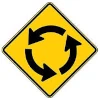 Drivers sometimes enter roundabouts without yielding, signal incorrectly or travel in the wrong direction. Knowing how to use a roundabout safely is an important part of being a responsible driver. Traffic patterns and road designs change, so it is worth reviewing the rules and refreshing your driving skills from time to time.
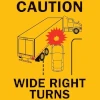 A long vehicle turning right can create a confusing situation for the driver following it. The vehicle may move to the left before beginning the turn, apparently leaving room to pass on the right. Is passing actually allowed?
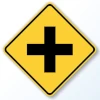 Some intersections are easy to understand. You approach, stop or yield as required, look for conflicting traffic and proceed when it is safe to do so. Others require a little more study.
 It doesn't take much to amuse a retired traffic cop. I was parked waiting for my wife and had about 15 minutes to watch traffic at a T intersection marked with a stop line, crosswalk and stop sign. Traffic on the city side street was steady as it was dusk and near the end of another business day. During the time I watched, not one driver came to a proper stop.
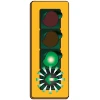 A Courtenay resident is upset with drivers who make left turns from the Island Highway onto Ryan Road and fail to enter the first available lane. He identifies this as a problem for drivers travelling in the opposite direction on the highway who want to turn right onto Ryan Road.
 Who goes first at a 4-way stop? The basic rule seems simple: first to stop, first to go. However, when two or more drivers stop at about the same time, things become more complicated. Do you know who should have the right of way?
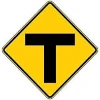 Question: I live on a street where there is a T intersection. I'm wondering if it is OK to park in the top T portion of the intersection.
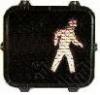 The intersection of Bertram Street and Bernard Avenue in Kelowna raises an interesting question: if one crosswalk has a pedestrian signal, does that signal control every crosswalk at the intersection? The answer is no. A pedestrian signal only controls the crossing for which it is installed.
 Question: The intersection of Valley Road and Summit Drive in Kelowna is a two-way stop for traffic on Valley Road. If one driver approaches from the south intending to turn left and another approaches from the north intending to turn right, which driver has the right of way?