
Question: 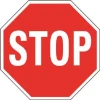 What is the purpose of completely coming to a stop at a 3 or 4 way stop when there are no vehicles or pedestrians near the intersection? A rolling stop should be sufficient, as MOST drivers including professional drivers never completely stop at stop signs. There are at least 3 good reasons for NOT coming to a complete stop. I cannot think of one good reason for coming to a COMPLETE stop.
The easy answer is because that's what the law says you must do, and if you follow it you will never need to pay a $169 ticket and receive 3 penalty points. However, it's a good question and let's examine both views.
The North American View
Safety and Visibility: Stop signs compel a total halt, allowing drivers to properly evaluate oncoming traffic or pedestrians, whereas a yield sign relies on a split-second decision.
Reduced Confusion: Stop signs offer a clear, unambiguous command, which is particularly useful at complex intersections with poor sight lines.
Legal Enforcement: A stop sign requires a complete cessation of motion, making it easier to determine liability in an accident compared to the subjective judgment required with a yield sign.
The British View
Minimalist Signage Philosophy: British road design follows a "less is more" approach, focusing on clear visibility and allowing drivers to use their own judgment.
Legal Requirements for Stop Signs: Stop signs in the UK require special authorization and are generally only installed at intersections with severely restricted visibility.
"Give Way" Allows Rolling Stops: A "Give Way" sign does not require a full stop if the road is clear, which keeps traffic flowing and reduces unnecessary stops.
Why Canada Uses Stop Signs
Canada was once a British colony and we initially followed British traffic rules. The interior of the province switched to the current North American system on July 15, 1920 followed by Vancouver and Vancouver Island on January 1, 1922.
We currently pretty much rubber stamp US rules and make them our own today. Stop signs are a requirement of the Manual of Uniform Traffic Control Devices so that's what our engineering practices result in.
Road Users Are Entitled to Expect Drivers to Stop
Read case law on the application of our Motor Vehicle Act and you will find that the courts take the position that road users are entitled to expect everyone to follow the law. This influences how they interact when using the roads. When you don't follow the rules you are responsible for increasing the risk of collision. This alone is a good reason for coming to a full stop.
Learn More
Share This Article
- Log in to post comments
Comments
You are required to completely stop your vehicle so that you have time to take a careful look in all directions for other road users - cars, pedestrians, cyclists, you name it. If you get in the habit of "rolling through" stop signs when it appears there is nobody around, one day you won't take a good enough look and there will be an accident. Pedestrians, cyclists and motorcycles are often overlooked when taking just a quick glance before you "roll on through."
- Log in to post comments
When two vehicles arrive at exactly the same time at an all way stop, it's only the vehicle that actually comes to a complete stop that gets the right of way.
Also, stopping fully might give you more time to realize that the stop sign you thought said 4-way actually said 3-way and that one direction doesn't have to stop!
- Log in to post comments
Until there is a new sign that says Coast, which is sort of what a Yield sign means, stop means stop. When I learned to drive they suggested that a full stop meant to cease all movement, count to three, and proced when safe, however the cease all movement would seem to be the key to stopping. Ie: a pit stop in racing is measured by the amount of tme a car is not moving. When a girl asks you to stop touching her, it means to stop, not coast on through your ministrations. Stop means stop. This is a simple concept.
When I learned to drive, it was suggested that a full stop was when the vehicle ceased to move and you counted to three. The notion of full stop does at least suggest the ceasing of all motion. However, of late, most driver's seem to measure a stop in kilometers per hour, with precious few choosing zero as the number to reach. I have seen stops from 2 to 20 kmph. It may be time for stop sign cams because the only thing that generally brings about full stops are other vehicles imeding the progress of rolling stoppers.
- Log in to post comments
It's not only the UK, but Europe in general. In residential areas you won't even see yield signs; right of way rules apply, just as they do here - but don't expect North American motorists to apply them properly. Stop signs are only used where sightlines are restricted. Otherwise, motorists are trusted to use their judgement.
For us, rolling "stops" are unlawful yes, but dangerous? Highly debatable. I'd say that over 90% of stop signs could be reasonably replaced with yield signs, saving fuel, brake material, and tire rubber and reducing air pollution for all.
- Log in to post comments
Possibly the British view might work here, but current conditions as indicated by North American drivers can lead to situations where the intended "roller" as the 2nd vehicle at an intersection does not consider that vehicle # 1 in front, may actually want to stop at the designated stop point.
This situation perhaps should lead to review by legislators and enforcement agencies for any changes to driver practice.
- Log in to post comments
You Are Required To Stop