
When installing a school crosswalk for the first time on a two-lane road with a 30 km/h speed limit, the design goal is clear. The system must focus on maximum visibility, attracting and holding drivers' attention, and protecting short sightlines for elementary-aged children. An ideal installation does not rely on paint alone; it combines structural narrowing, physical elevation, and active electronics to create a crossing environment that reduces the opportunity for driver and pedestrian error.
The appropriate combination of treatments depends on the road, traffic volumes and speeds, pedestrian demand, sight distance and other site-specific conditions. The following describes a high-safety design rather than a universal B.C. standard. For more information about active transportation design practices, see the B.C. Active Transportation Design Guide
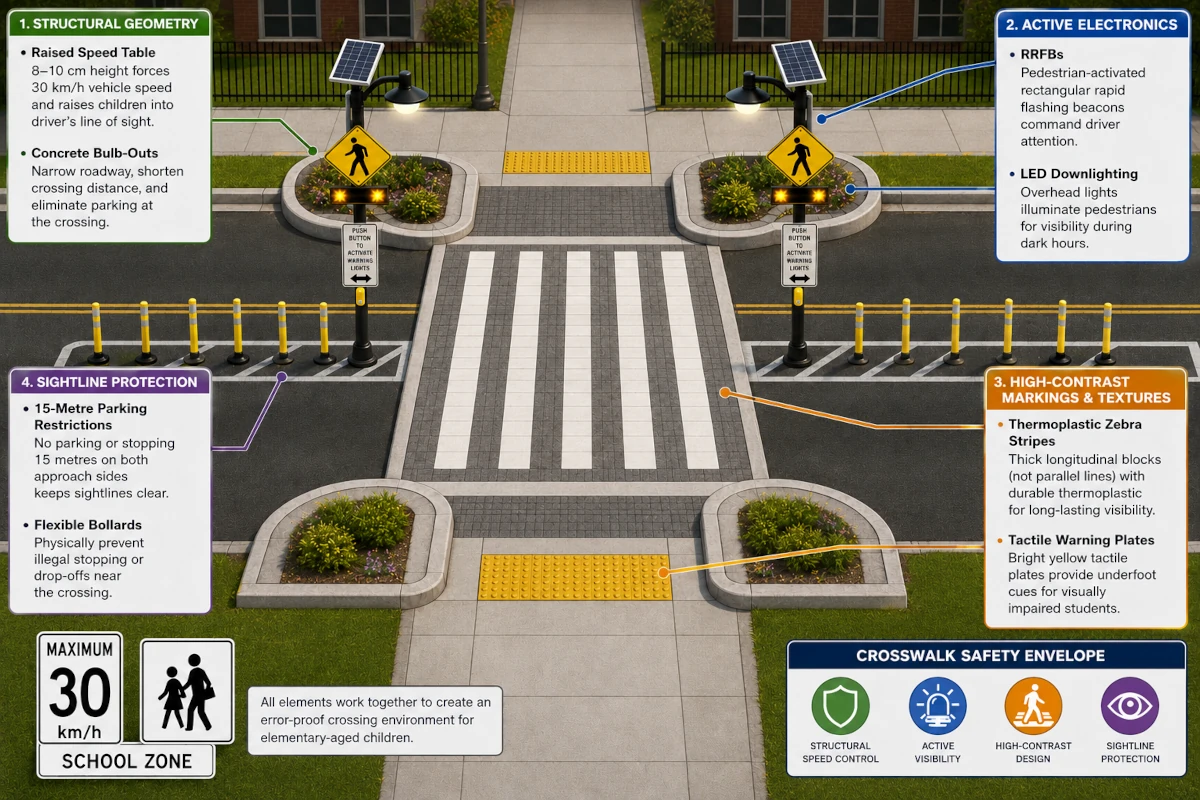
1. Structural Geometry: Raised Crosswalks & Bulb-Outs
- Raised Crosswalk: Raising the crossing to sidewalk level can reduce vehicle speeds and improve pedestrian visibility. The design, height, drainage and transitions should be established by the road authority to suit the site.
- Concrete Curb Extensions (Bulb-Outs): Extending the sidewalk into the parking lane narrows the roadway at the crossing point. This reduces the distance and time a child is exposed to traffic and helps draw drivers' attention to the pedestrian zone.
2. Active Electronics: Pedestrian-Activated RRFBs
- Rectangular Rapid Flashing Beacons (RRFBs): Static signs are easily missed during frantic school drop-off hours. Pedestrian-activated RRFBs at the crossing are an active warning treatment that attracts drivers' attention when a pedestrian is crossing.
- Overhead LED Downlighting: For dark winter mornings and late-afternoon school events, overhead luminaires should provide adequate illumination of pedestrians, rather than simply illuminating the signs.
3. High-Contrast Markings & Textures
- High-Contrast Crosswalk Markings: The crosswalk should use highly visible, durable pavement markings that clearly define the pedestrian crossing for approaching drivers. High-contrast markings, such as durable preformed thermoplastic, can improve visibility and provide better long-term performance than conventional paint, particularly where markings are exposed to traffic, weather and snowplowing.
- Tactile Warning Plates: High-contrast tactile walking surface indicators (truncated domes) should be installed at the curb ramps. They provide important underfoot and visual cues for pedestrians with visual impairments before they enter the roadway.
4. Sightline Protection: Daylight the Crossing
- 15-Metre Sightline Buffer: Vehicles stopped or parked near a crosswalk can obstruct a driver's view of pedestrians, particularly children. This design would provide a 15-metre clear zone on each approach to the crosswalk, exceeding B.C.'s general 6-metre prohibition on stopping near a crosswalk. The additional clear space improves sightlines and gives approaching drivers more opportunity to see pedestrians.
- Flexible Bollards: High-visibility flexible bollards can help protect the restricted buffer zone from vehicles stopping to drop off or pick up students near the crossing.
The Blueprint Layout
This layout visualizes how these physical and digital elements integrate on a standard two-lane road to form a comprehensive safety envelope:
Learn More
- Log in to post comments