
Few driving situations create more tension than approaching the end of a passing lane while another vehicle is beside you. One driver is trying to complete the pass, while the other is preparing to merge. If neither driver is willing to give way, the result can be a collision.
A British Columbia Supreme Court case arising from a crash on Highway 99 between Pemberton and Whistler offers an important reminder that these situations aren't about who gets ahead first—they're about making safe decisions.
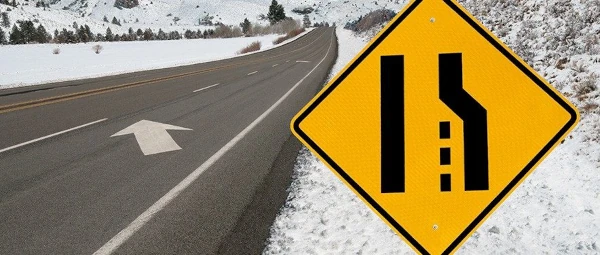
On a clear Thanksgiving weekend morning, a Jeep moved into the left lane to overtake a pickup truck in one of Highway 99's designated passing lanes. As the two vehicles approached the point where the passing lane ended, they remained beside each other while the roadway gradually narrowed back to a single southbound lane.
The court found that both drivers had several seconds to recognize that they were running out of room. Rather than occurring immediately at the end of the marked passing lane, the collision happened after the vehicles had travelled side-by-side through much of the transition area where the roadway narrowed from two lanes to one.
What Does the Law Require?
The Motor Vehicle Act doesn't give either driver permission to force the situation simply because a passing lane is ending.
A driver changing lanes must first ensure the movement can be made safely without affecting another vehicle. Likewise, a driver who is overtaking another vehicle must pass at a safe distance and must not return to the original lane until safely clear of the vehicle being passed. Above all, every driver has a duty to drive with due care and attention.
The court also noted that there is no rule making the passing driver automatically responsible in every case. Responsibility depends on the circumstances and on which driver was in the better position to recognize the developing hazard and avoid the collision.
The driver with the better opportunity to see the potential collision before it happens has a correspondingly greater duty to avoid the collision.
Court Decision on Liability
After considering all of the evidence, including expert accident reconstruction, the judge concluded that the passing driver continued attempting to complete the pass as the available roadway narrowed. When the Jeep moved back toward the lane occupied by the pickup before it was safely clear, the two vehicles collided.
The judge concluded that the passing driver attempted to return to the lane before she was safely clear of the pickup. That movement led directly to the collision, making her responsible for it.
The Lesson for Drivers
Although this collision happened in a passing lane, the lesson applies anywhere that two lanes become one.
The same decisions confront drivers at the end of freeway acceleration lanes, construction lane closures, and merge points where traffic must share a single lane. In every case, drivers need to work together rather than compete for the same piece of pavement.
Unfortunately, many of these situations become contests instead of cooperative driving. One driver doesn't want to let another vehicle merge ahead, while the other is determined not to abandon a pass or merge behind. Once the focus shifts from safety to position, the risk of a collision increases dramatically.
If you're overtaking another vehicle and it becomes obvious that you can't complete the pass comfortably before the available road disappears, the safest choice is usually to ease off the accelerator and merge in behind. Losing a few seconds is a small price to pay for avoiding a crash.
If you're the driver being overtaken, don't turn the situation into a competition either. Maintain a steady speed, remain predictable and avoid trying to prevent the other driver from merging ahead. Cooperative driving doesn't mean surrendering your right of way—it means avoiding actions that increase the risk of a collision.
Driving safely isn't about proving who has the right of way or who deserves to be first. It's about recognizing that a little patience and cooperation can prevent a collision. Whether you're leaving a passing lane, merging from an acceleration lane or approaching a lane closure, arriving a few seconds later is always preferable to not arriving at all.
Related Court Decisions
- Read the Reasons for Judgment - Doyle v Hubick
- Raber v Romero involves similar issues involving vehicles approaching a lane reduction and the responsibilities of drivers when lanes merge.
- Log in to post comments
Comments
Years back I had the situation where as soon as we past the lane ends in 250m the driver I was overtaking immediately switched lanes. Only problem I was beside him at the time. Luckily I was able to cross into the oncoming lane as there was no traffic.
Where it became an issue a cop was sitting in his normal spot picking up speeders as they accelerated over the speed limit to get by. I was charged for crossing a double solid line. I took it to Court and after discussion prior to going into the Court Room the ticket was dropped. I pointed out what had happened and suggested if he had been watching the traffic instead of worrying so much about people being over the speed limit he would have charged the other driver with an unsafe lane change.
And this is my question today. Why is it not made more clear in the MVA and the B.C. Drivers handbook when one should switch lanes?
I prefer the Zipper merge which is wait till the last minute then as the fog line cuts over you merge at that point. It gives you amble time to find a gap to move into and you can signal your intention in advance.
There is also the reverse. When another lane opens up whether it is a passing lane, highway switches from one to two lanes or for exiting the road move into it as soon as it becomes available.
My route home requires me to move into the right turn lane which I do as soon as it becomes available but the number of times people wait till the last minutes happens at least twice a week. In a lot of times they wait till the broken line has switched to a solid line then switch just metres prior to turning off. And most of them don't even signal their intentions to move into the lane although they will flip the signal light on and get at least one blink as they are already turning off the main road.
Why not have it clearly stated, when merging wait till the arrows point you to merge and when moving into a open lane, which with the keep right except to pass drivers should merge in as soon as it is open.
- Log in to post comments
When to merge