Impersonating a Police Vehicle - What to Do if You Are Suspicious
 Question: What should I do if a vehicle that appears to be a police car signals me to stop, but I am not convinced that it is really a police vehicle?

Question: What should I do if a vehicle that appears to be a police car signals me to stop, but I am not convinced that it is really a police vehicle?
 A DriveSmartBC reader asked about parking in an underground condominium garage. The building was constructed in the 1970s, the parking stalls are small, and structural columns make some of them even more difficult to use. The reader uses a walker and needs enough room beside the vehicle to get in and out. Neighbours have complained that the vehicle is not parked far enough forward in the stall.
 Fog can turn an ordinary drive into a very different experience in just a few seconds. The road may be wet, visibility may be measured in hundreds rather than thousands of metres, and vehicles travelling toward you or in front of you can seem to appear out of nowhere.
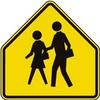 A visitor to this website remarked that the term "regular school day" in relation to school zone signs is becoming more and more ambiguous. The Motor Vehicle Act merely refers to "A person driving a vehicle on a regular school day" and I no longer know what a regular school day is, particularly since I don't have kids in school and when I am in an unfamiliar area of the province.
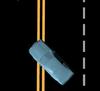 An Osoyoos resident once asked about parking in the downtown area. There was angle parking on both sides of the main street, but the street was marked with a double solid yellow line down the centre. The question was simple: Can a driver cross the double solid yellow line to park on the other side of the street?
 Right-hand-drive (RHD) vehicles are legal in British Columbia, but driving one presents some differences that are worth understanding when most of the traffic around you is travelling on the right side of the road.
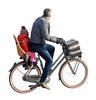 Every so often I hear a complaint about cyclists that goes something like this:
“They aren't licensed, they don't have insurance and they don't pay for the roads. Why should they be allowed to use them?”
 Ask a group of drivers whether they consider themselves to be better than average, and you are likely to see a lot of hands go up. Some of them may actually be right. The more interesting question is how we know.
 A reader asked why daytime running lights (DRLs) are required on vehicles in Canada. He also wondered why there appeared to be little enforcement when vehicles that are supposed to have DRLs are being driven without them.
 Winter tire season is almost here. Starting October 1, 2026, winter tires (or chains, for commercial vehicles) become mandatory on most BC highways — and the rules stay in effect until either March 31 or April 30, 2027, depending on the route. If you drive outside the Lower Mainland or Greater Victoria at any point this winter, it's worth checking now rather than getting caught out at a highway checkpoint or, worse, in a ditch.