
Yes, stretching tires can be dangerous. Automotive professionals and tire manufacturers highly discourage this practice. Tire stretching involves mounting a tire onto a wheel rim that is wider or narrower than the manufacturer's approved rim-width range.
While popular in custom "stance" car culture for cosmetic reasons—and occasionally used in drifting to stiffen sidewalls—it introduces significant structural and operational hazards.
Not every wider wheel is tire stretching. A tire can normally be mounted on wheels of different widths as long as the wheel width falls within the range approved by the tire manufacturer. The problem occurs when the wheel falls outside that range.
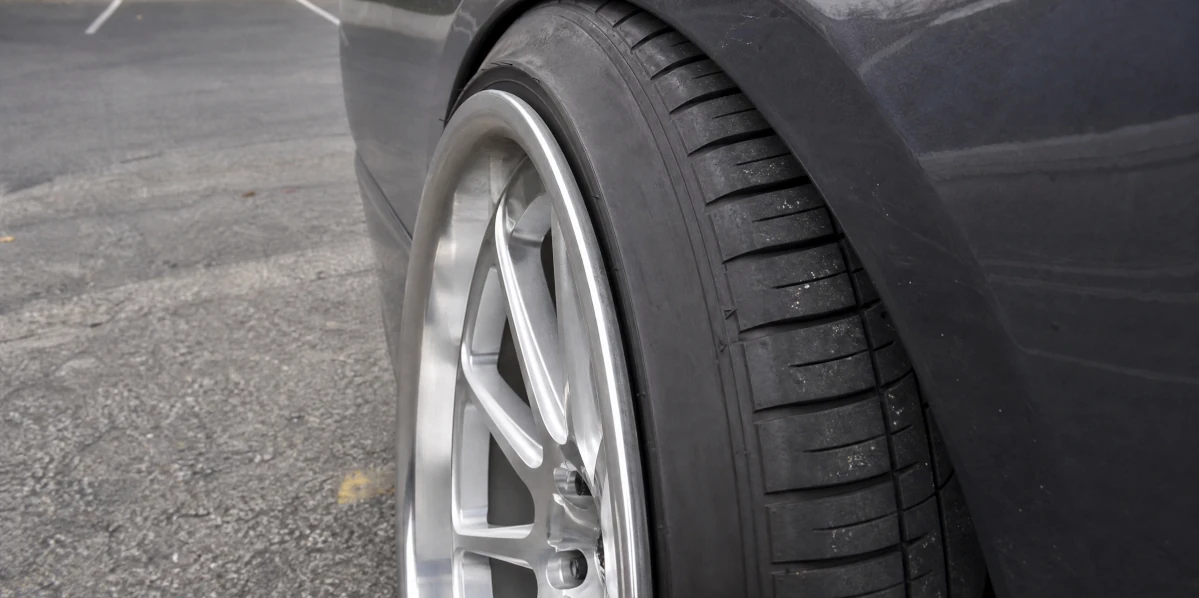
Primary Safety Hazards
- Debeading (Bead Unseating): A tire mounted outside its approved rim-width range may not provide the bead seating characteristics for which it was designed.
- Sudden Blowouts: Tires mounted outside the manufacturer's recommended rim-width range may develop cracking, unusual or rapid wear, and other failure conditions because of the stresses and repeated flexing they experience.
- Vehicle Handling: Mounting outside the approved range can alter the tire's handling characteristics and contact with the road and may adversely affect handling, braking and stability.
- Wheel and Tire Damage: Stretching can leave more of the wheel rim exposed to potholes and curbs. With less tire sidewall extending beyond the rim, impacts can damage the wheel or tire.
Legal and Practical Consequences
- Warranty Coverage: Mounting a tire outside the manufacturer's approved rim-width range can exclude resulting damage or tire failure from warranty coverage. Tire manufacturers' warranties commonly exclude damage resulting from improper mounting, improper rims, misuse, misapplication or use contrary to their recommendations.
- Professional Installation: Many reputable tire shops will refuse to mount a tire on a wheel that falls outside the manufacturer's approved rim-width range because of the safety risks and potential liability associated with an improper tire and wheel combination.
- Official BC Inspection Failure: Under Section 9 of the British Columbia Commercial Vehicle Safety and Enforcement (CVSE) Vehicle Inspection Manual, a vehicle is rejected if the wheel/rim size does not match the tire size, including width mismatches identified by the manual as "tire stretching."
If you are planning to modify your wheels, always consult the tire manufacturer's spec sheet to ensure your chosen rim width falls within their approved fitment range.
Learn More
- Log in to post comments