
Window tinting can make a vehicle look attractive and reduce sunlight entering the passenger compartment. However, tinting can also affect visibility, and British Columbia places specific restrictions on the use of aftermarket window film.
Drivers should understand the difference between tint incorporated into the glass during manufacture and film applied to the glass afterward. The two are not treated identically under BC law.
During my years in traffic enforcement, I regularly encountered vehicles with illegally tinted front windows. Some drivers appeared to believe that if the tint was not excessively dark, it would be acceptable. That is not how the rules work.
Why Clear Windows Matter
Driving depends heavily on visual information. Drivers need to see hazards, recognize other road users and judge what is happening around them.
Window tinting can also make it harder for pedestrians, cyclists and other drivers to see the vehicle's occupants. Being able to see where another road user is looking can sometimes help people anticipate what that person intends to do.
Dark windows can create additional difficulties when visibility is already reduced, particularly at night. A driver who can see adequately through tinted glass during daylight may have more difficulty detecting objects in darkness.
What Does BC Law Permit?
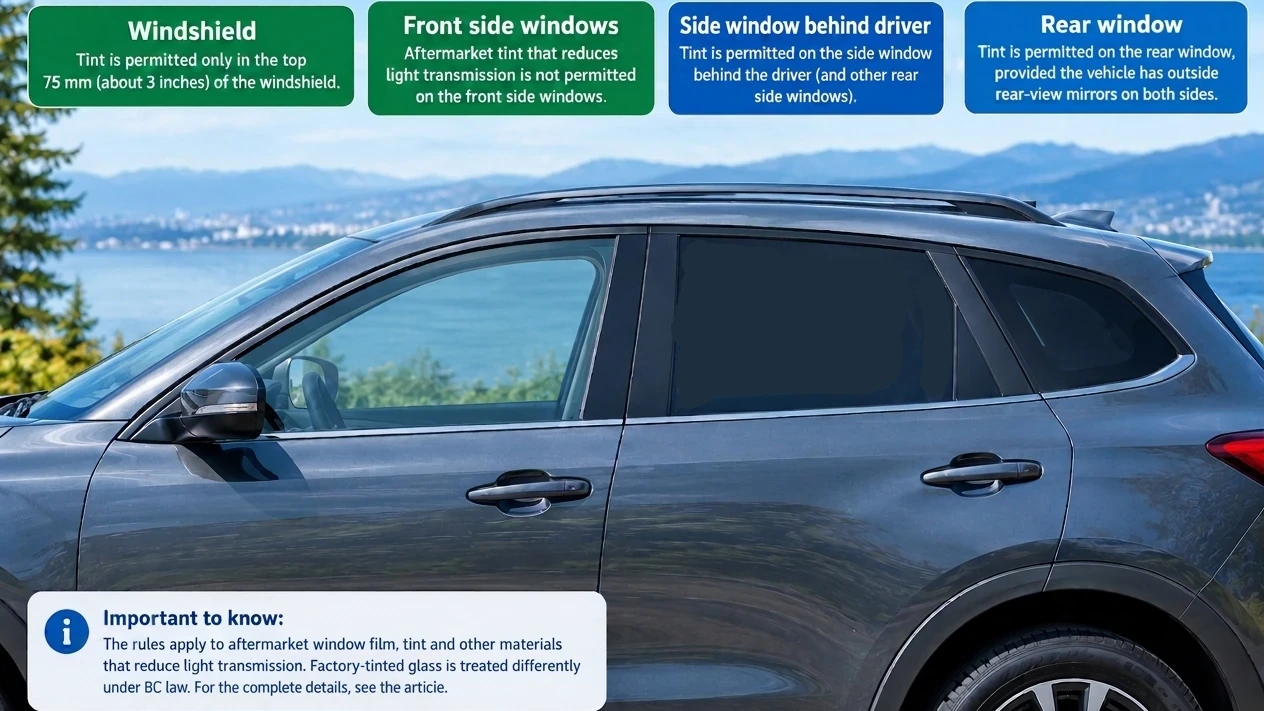
Section 7.05(8) of the Motor Vehicle Act Regulations restricts material that reduces the amount of light transmitted through a vehicle's windshield or windows.
The regulation permits this material in three specific locations:
- On the windshield, but not more than 75 mm below its top.
- On a side window behind the driver.
- On the rear window, provided the vehicle has outside rear-view mirrors on both sides.
Consequently, aftermarket tinting film that reduces light transmission is not permitted on the windshield below the 75 mm allowance or on the side windows beside the driver.
The restriction is not based simply on how dark the film appears. The regulation addresses material that reduces light transmission, while the vehicle inspection requirements also address aftermarket tint and coatings on the front side windows.
Factory-Tinted Glass Is Different
There are two common ways to tint automotive glass: tint incorporated into the glass during manufacture and film applied to the glass afterward.
Section 7.05(9) of the Motor Vehicle Act Regulations requires tint incorporated into manufactured glass to meet the minimum light-transmission requirements of the Canadian Motor Vehicle Safety Standards.
This is different from applying aftermarket film to a window that was not manufactured with that tint. A driver should not assume that because factory-tinted glass is permitted, applying similar-looking film afterward is also permitted.
What About Clear UV-Reducing Film?
Some products are marketed as clear films that reduce ultraviolet radiation entering the vehicle. Because they may transmit visible light without noticeably darkening the glass, drivers might assume that they can be applied to the front side windows.
However, the BC Vehicle Inspection Manual identifies aftermarket tint applied by film, other material or coating on side windows forward of the driver's seat back as grounds for rejecting a vehicle during inspection.
Clear appearance alone is therefore not sufficient to establish that an aftermarket product is acceptable. Drivers should not assume that clear UV-reducing film is permitted on the front side windows simply because it does not look dark.
The 2008 Commercial Vehicle Safety and Enforcement bulletin on aftermarket window tinting also cautioned that clear UV film could alter the safety performance of glass. The bulletin advised people with sunlight sensitivity to seek solutions that do not compromise driving safety.
Responsibilities of Businesses
Drivers are responsible for ensuring that their vehicles comply with BC law, but businesses involved in window tinting and vehicle sales also have responsibilities.
A business that installs aftermarket window film should understand the restrictions and avoid installing material in locations where it is prohibited. Customers should not have to discover after the work is completed that the modification does not comply with the law.
Vehicle dealers also have legal obligations. Section 222 of the Motor Vehicle Act prohibits selling, offering for sale, displaying for sale or delivering a vehicle that does not comply with the Act and its regulations. Section 8.01 of the Motor Vehicle Act Regulations also addresses the equipment requirements for vehicles kept for sale or sold by motor vehicle dealers.
Anyone purchasing a vehicle with aftermarket window tint should check that the tint complies with BC requirements. A vehicle being offered for sale does not, by itself, establish that its equipment is legal.
Are Medical Exemptions Available?
Some people experience medical conditions that make them unusually sensitive to sunlight. It is understandable that they may look for ways to reduce their exposure while driving.
However, section 7.05(8) of the Motor Vehicle Act Regulations does not provide a medical exemption from its window-tinting restrictions. A doctor's note does not, by itself, authorize a driver to use otherwise prohibited tinting film.
Anyone who needs additional protection from sunlight should seek a solution that complies with the regulations rather than assuming that a medical need permits prohibited window modifications.
What Should Drivers Do?
Before having window film installed, check the current requirements and confirm that the proposed product and its intended location comply with them. Do not rely solely on a product being described as clear, legal or suitable for automotive use.
If a vehicle already has aftermarket tint on its front side windows, the prudent course is to have the installation assessed and remove any material that does not comply with BC requirements.
Window tinting may offer comfort and appearance benefits, but those benefits should not come at the expense of legal compliance or the ability to see and be seen on the road.
Learn More
- Log in to post comments