
BC Winter Tire Requirements 2026-2027
 Winter tire season is almost here. Starting October 1, 2026, winter tires (or chains, for commercial vehicles) become mandatory on most BC highways — and the rules stay in effect until either March 31 or April 30, 2027, depending on the route. If you drive outside the Lower Mainland or Greater Victoria at any point this winter, it's worth checking now rather than getting caught out at a highway checkpoint or, worse, in a ditch.
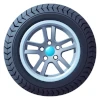 Yes, stretching tires can be dangerous. Automotive professionals and tire manufacturers highly discourage this practice. Tire stretching involves mounting a tire onto a wheel rim that is wider or narrower than the manufacturer's approved rim-width range.
 Most drivers know that the parking brake is there to keep a parked vehicle from moving. But what happens if you are driving and the service brakes suddenly stop working?
 Question: Is it legal to have a nitrous oxide system hooked up to a vehicle in British Columbia? If the bottle is detached from the system, is it legal? Does a DOT/WHMIS oxidizer symbol grant any right to transport it?
 A BC Provincial Court case, R. v. Dolson (2014), officially put the spotlight on whether aftermarket "Adventure Doors" are legal on BC highways. Here is what you need to know before you strip down your rig.
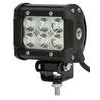 There is little doubt in my mind that one of the most popular add on accessories for vehicles is some type of light. While it is possible that some of these lamps are legal for use
  Long winter nights mean we spend more time driving while using our headlights. All headlights are not created equal
  Question: I would like to know about the requirement for winter tires on recreational trailers from October 1 to March 31 on B.C. highways. As far as I'm aware, I'm required to have snowflake / M+S tires in winter on my travel trailer, but such tires are not made. Can you please advise me on this situation?
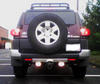 As is often the case, today's article comes from what I see around me as I drive. I was passed by a cube van with one white floodlight on the right rear illuminated. The driver of a truck tractor with no trailer pulled in front of him using the right lane and flashed his docking and backup lights a few times. The offending driver didn't get the hint and his backup floodlight remained on.
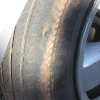 Place two average adult feet side by side on a piece of paper and draw a box around their edges. The area of this box is about the same as the area of your tires in contact with the road on an average automobile. Tires are your only contact with the highway, and collisions result when that contact is lost.