
 Do you have $212,000.00 in spare disposable income? This case assigns liability for an impaired driving crash where ICBC denied the claim because the driver responsible was impaired by alcohol at the time. Driving while impaired by any substance puts a driver in breach of their insurance policy conditions and allows ICBC to recover claims costs from the driver.
The Crash
Ryan Hamman was travelling at about 105 km/h in the posted 80 km/h zone approaching construction on Highway 1 near 176 Street in Surrey. He had a clear view ahead but rear ended a Cobalt driven by Timothy McDowell that was stopped on Highway 1 near 176 Street in Surrey. The Cobalt was driven forward into a Tacoma in front of it. Mr. McDowell was injured.
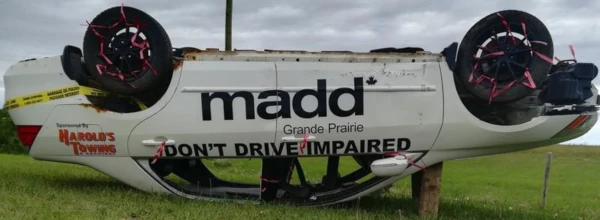
Impaired Driving Investigation
Police attended the scene where Mr. Hamman admitted having consumed "a couple of drinks." Cst. Jenkins investigated this further using a screening device and ultimately breath testing obtained samples of 170 and 180 mg% from Mr. Hamman.
ICBC Claim
ICBC denied coverage because Mr. Hamman was impaired by alcohol at the time of the collision. Litigation ensued with the final outcome being damages against Mr. Hamman and in favour of ICBC amounting to $212,000.00, interest and court costs.
Appeal of Decision
Mr. Hamman appealed the Supreme Court decision essentially challenging the legality of the breath testing results. The justice ruled the following:
[83] There is no basis upon which this Court could interfere with the factual findings of the trial judge. Those findings are supported by the evidence and they overwhelmingly established that the appellant was incapable of properly controlling his motor vehicle at the time of the accident. Further, there is no reversible error in principle in the judge’s analysis or in his conduct of the trial. It is for these reasons I concluded that the appeal should be dismissed.
Recovery of Award
ICBC will recover the judgment from Mr. Hamman. His ability to renew his driver's licence and vehicle insurance can be denied if he does not arrange for and make the repayment. Non-payment may also result in an attempt to seize assets, including a vehicle, through court enforcement.
Learn More
Share This Article
- Log in to post comments
Comments
Well Mr. Hamman doesn't sound like the brightest individual.
He had to know that he was really impaired. When ICBC denied the claim he obviously thought he could lie his way out of the problem.
But if you're going to try that route, the least you can do is decide on a plausible story, research it, memorise it and check for holes. Telling the truth is a lot easier, isn't it?
I can only assume that this guy thought that a court fight was a last ditch attempt. But it turned out to be a waste of everyone's time.
Perhaps the true tragedy is that our young people have no idea that booze and drugs can easily result in a lifetime of destitution.
- Log in to post comments
In this and other forums, we have drivers asking questions regarding getting tickets. ie "Can I get a ticket if I keep driving with my Alberta license plates after I've lived and worked in BC over 30 days ?"
The answer yes you can get a ticket, maybe if you happen to get pulled over, if the police officer has the presents of mind to ask some questions if you answer the questions in a way that indicates you should have obtained BC plates....... (for example)
BUT what they are forgetting in these scenarios is that getting a traffic ticket is NOTHING compared to being in breach of insurance if while driving contrary to the rules. If it voids or proves their insurance is not valid, it could cost hundreds of thousands of dollars.
Who do you think is going to do a more in depth investigation, a traffic cop at the side of the road, or an insurance adjuster and perhaps insurance fraud investigator who's insurance company is at risk of paying out tens of thousands of dollars ?
There are three types of breaches of rules and regulations that pertain to the use, operation and registering of a motor vehicle :
The driver is at risk for a ticket/charge
The driver at risk of breaching their insurance
The driver is at risk of both.
The average driver and even the average police officer, mostly only consider, and/or are aware of the first. Ironically if the infraction involves a huge financial cost/loss the latter two are the REAL expensive ones.
Of course the normal non-criminal driving violations do not breach insurance coverage. You disobey a stop sign and hit another car, your insurance is valid, you're at fault, but your insurance is valid.
"Minor" MVA violations such as not registering your vehicle within 30 days of settling in BC, aren't so minor if the violation is coupled with an insurance claim.
The actions in the featured case, a breach of criminal law while driving, of course is a breach of insurance coverage, both one's "own damage" (paying for the charged driver's vehicle) and their "third party liability" (all the losses incurred by others, vehicles, property and people).
- Log in to post comments
Inconsistent lying doesn't fly