
National Safe Driving Week takes place across Canada from December 1 to 7, 2026. Organized by the Canada Safety Council, this annual campaign has been running since the 1950s. Its purpose is to remind Canadians that safe driving practices are essential to preventing collisions, injuries and deaths on our roads.
Driving is something most of us do regularly, often without giving much thought to the decisions we make along the way. Familiar routes, routine trips and years of experience can make driving seem almost automatic. Unfortunately, familiarity can also lead to complacency.
Safe driving requires more than knowing the rules of the road. It involves recognizing hazards, making sound decisions, managing risk and accepting responsibility for the safety of everyone who shares the road.
Safe Driving Begins With the Driver
Modern vehicles offer an impressive range of safety features. Antilock brakes, electronic stability control, collision warning systems, automatic emergency braking and other technologies can help drivers avoid collisions or reduce their severity.
These systems are valuable, but none of them replaces an attentive and competent driver. Technology has limitations, and drivers must remain prepared to recognize hazards and take appropriate action themselves.
A driver's attitude also influences safety. Impatience, frustration, overconfidence and a belief that other road users should simply get out of the way can lead to unnecessary risks. A willingness to be patient, considerate and predictable makes the road safer for everyone.
Pay Attention to the Driving Task
Driving requires continuous attention. Drivers must observe the road ahead, monitor traffic around them, recognize potential hazards and anticipate what other road users might do.
Distractions interfere with that process. Using a cellphone, programming a navigation system, adjusting entertainment controls, eating or becoming absorbed in something happening outside the vehicle can take attention away from the driving task.
Distraction is not limited to looking away from the road. A driver can be looking straight ahead while mentally occupied with a conversation, an upsetting event or something unrelated to driving.
Before beginning a trip, set up navigation, adjust vehicle controls and secure anything that might need attention. Put the cellphone away and avoid activities that compete with the attention needed to drive.
Choose a Safe Speed
A posted speed limit is not a guarantee that travelling at that speed will be safe. Drivers must consider the road, traffic, visibility and weather conditions when deciding how fast to travel.
British Columbia's Motor Vehicle Act requires drivers to avoid travelling at a speed that is excessive relative to the road, traffic, visibility or weather conditions. This means that a driver may be travelling below the posted limit and still be going too fast for the circumstances.
Rain, fog, darkness, snow, ice, loose gravel, curves and restricted sightlines can all require a reduction in speed. Slowing down provides more time to recognize hazards, make decisions and respond before a dangerous situation develops.
It is also important to resist pressure from drivers behind you. Their impatience does not change the conditions ahead or make an unsafe passing opportunity any safer.
Leave Enough Space
Following too closely is a common and unnecessary driving risk. It reduces the time available to react when the vehicle ahead slows or stops and increases the likelihood of a rear-end collision.
The two-second rule is a useful starting point for maintaining a following distance in favourable conditions. Choose a fixed point on the road and count the time between the vehicle ahead passing it and your vehicle reaching the same point.
More distance is needed when traction is reduced, visibility is poor, traffic is unpredictable or a vehicle is heavily loaded. Drivers should also maintain enough space beside their vehicles to have room to manoeuvre if something unexpected happens.
A good space cushion provides time to recognize a developing problem and respond without having to make an emergency manoeuvre.
Never Drive Impaired or Fatigued
Alcohol, cannabis, other drugs and some medications can affect judgment, coordination, perception and reaction time. A driver does not have to feel intoxicated to have their ability to drive safely impaired.
Plan ahead if you intend to consume alcohol or cannabis. Arrange a designated driver, use public transportation or another safe means of getting home. Never assume that waiting a short time will make you fit to drive.
Fatigue is another significant risk. Tired drivers may have difficulty maintaining attention, recognizing hazards and responding promptly. Severe fatigue can result in microsleeps, brief periods when the driver is actually asleep.
Get adequate rest before driving, take breaks on longer journeys and stop somewhere safe if you become drowsy. Opening a window, turning up the radio or drinking coffee is not a reliable substitute for sleep.
Share the Road Considerately
Roads are used by people travelling in many different ways. Drivers share them with pedestrians, cyclists, motorcyclists, commercial vehicles, farm equipment and other road users.
Some road users are more vulnerable than others because they have little protection if a collision occurs. Drivers should be especially alert near crosswalks, intersections, schools, bus stops and locations where pedestrians and cyclists are likely to be present.
Give cyclists and pedestrians the space required by law when passing, and allow additional room whenever conditions warrant it. Watch for people who may be difficult to see, particularly at night, in poor weather or when visibility is restricted.
Courtesy and patience are important too. Allowing another driver to merge, waiting for a safe opportunity to pass or slowing down to accommodate a vulnerable road user costs little time and can prevent a serious collision.
Prepare for Winter Driving
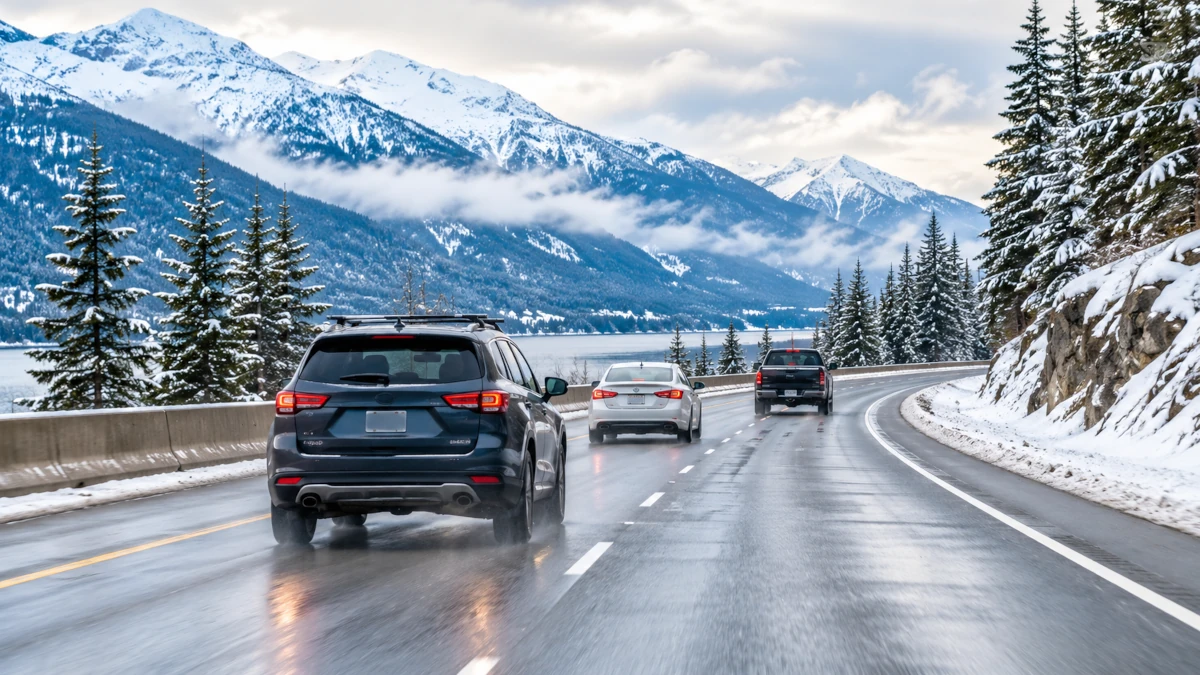
The timing of National Safe Driving Week is particularly appropriate in British Columbia. December brings shorter days, longer periods of darkness and the possibility of rain, snow, ice and freezing temperatures.
Winter driving requires preparation and a willingness to change driving habits to suit the conditions. Before setting out, clear snow and ice from all windows, mirrors, lights and other areas that affect visibility. Make sure your tires are suitable for the conditions and that your vehicle is in good mechanical condition.
Once on the road, reduce speed when traction or visibility deteriorates and increase following distance. Avoid sudden braking, acceleration and steering movements that can cause a loss of control on slippery surfaces.
Remember that four-wheel drive and all-wheel drive can help a vehicle get moving, but they do not provide additional braking traction. A vehicle that accelerates confidently on snow and ice may still have difficulty stopping or turning.
If conditions become too hazardous, consider delaying your trip or choosing another way to travel.
Safe Driving Is a Year-Round Responsibility
National Safe Driving Week provides an opportunity to think about the choices we make behind the wheel, but the principles it promotes should not be limited to one week in December.
Every trip involves decisions about speed, space, attention, road conditions and the actions of other road users. Even experienced drivers can benefit from reviewing their habits and recognizing where they could make safer choices.
The goal is not simply to avoid a traffic ticket or prevent damage to a vehicle. It is to make sure that everyone who uses the road has a better chance of reaching their destination safely.
Safe driving is a personal responsibility that we all share. Make it a habit every time you get behind the wheel.
Learn More
- Log in to post comments