
A driver can be travelling at or below the posted speed limit and still be driving too fast for the conditions. The appropriate speed depends on more than the number displayed on a roadside sign. Drivers must consider the road ahead, the traffic around them, how far they can see and the conditions affecting their ability to stop or avoid a collision.
In British Columbia, this responsibility is part of the law as well as a basic principle of safe driving.
What Does the Law Say?
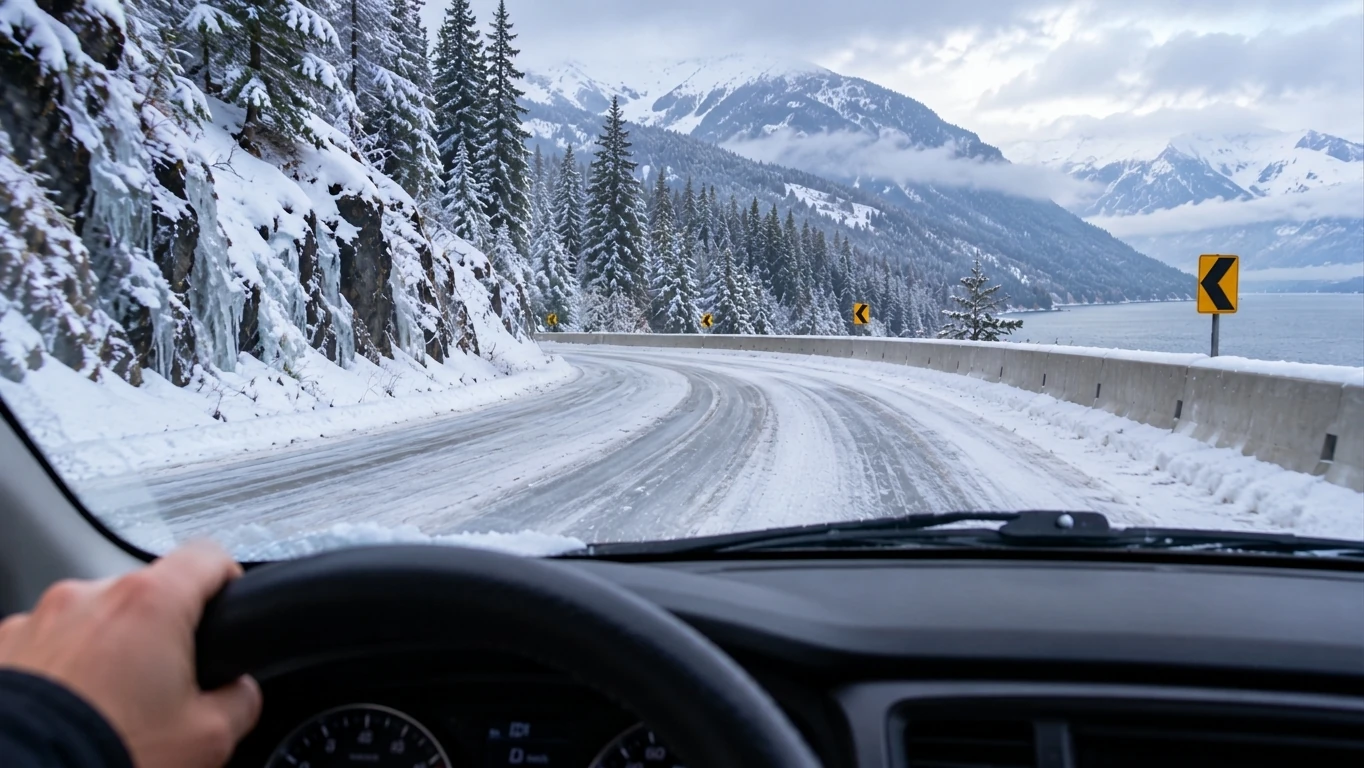
Section 144(1)(c) of BC's Motor Vehicle Act says a person must not drive a motor vehicle on a highway at a speed that is excessive relative to the road, traffic, visibility or weather conditions.
These four factors extend beyond the weather. A driver may need to slow down on a clear, dry day because of a sharp curve, heavy traffic or restricted visibility.
A posted speed limit establishes the maximum permitted speed, but it does not guarantee that travelling at that speed will be safe in every situation.
The Road Ahead
Road design and geometry affect the speed at which a driver can safely travel. A curve, steep hill, narrow roadway or uneven surface may require a reduction in speed, particularly when the road is unfamiliar.
The posted limit might be appropriate for one curve but too fast for another. Drivers need to recognise the curve, judge its severity and adjust speed before entering it.
The same principle applies when approaching an intersection, a construction zone or a section of road where visibility is restricted. Waiting until a hazard is immediately ahead may leave too little time or distance to respond safely.
Traffic Conditions
The presence and behaviour of other road users also influence an appropriate speed. Congestion, vehicles slowing ahead, pedestrians near the roadway and cyclists sharing a narrow road can all require a driver to slow down.
Approaching a line of stopped traffic at highway speed leaves little margin for error if the queue extends farther than expected. Reducing speed as traffic conditions change provides more time to recognise what is happening and respond.
A large vehicle, a bend in the road or roadside vegetation may obscure hazards ahead. Travelling at a speed that allows time to respond when the view opens up helps reduce the risk of a collision.
Sharing the Road With Slower Drivers
Not every driver will choose the same speed for a given set of conditions. A driver may slow down because of limited visibility, slippery pavement, an unfamiliar road or a need for more time to respond to hazards.
If you encounter a driver travelling more slowly than you would prefer, allow them to continue without pressure. Following too closely, flashing headlights, sounding the horn unnecessarily or making an unsafe passing manoeuvre increases risk without making the road any safer.
Maintain a safe following distance and pass only when it is lawful and safe to do so. If the road, visibility or traffic does not provide a safe opportunity to pass, be patient. Arriving a little later is preferable to creating a dangerous situation.
Drivers travelling below the speed limit should remain aware of traffic behind them and, where practical, allow others to pass safely. However, they should not feel pressured into driving faster than conditions permit. Section 145(1) of the Motor Vehicle Act prohibits driving so slowly that normal and reasonable traffic is impeded, except when reduced speed is necessary for safe operation or required by law.
Visibility and Weather
Rain, fog, snow, blowing dust, darkness and glare can reduce the distance at which hazards become visible. Wet, icy or loose surfaces can also reduce tire grip and increase stopping distance.
Being able to see a hazard does not necessarily mean there is enough distance to stop before reaching it. Drivers should adjust speed and following distance to account for both visibility and traction.
There is no single speed that is safe for every combination of visibility, road surface, vehicle and traffic. ICBC provides additional advice in its guide to driving in poor conditions, including recommendations for following distance and driving on wet or slippery roads.
Speed, Reaction Time and Stopping Distance
When a hazard appears, a driver needs time to recognise it, decide how to respond and act. The vehicle continues travelling during that process before braking has any effect on its speed.
After braking begins, stopping distance depends on factors including speed, tire condition, braking performance and the grip available between the tires and the road. Wet, icy or loose surfaces can make stopping more difficult.
As speed increases, a vehicle covers more ground during the driver's reaction time, and more distance is generally needed to stop. Reducing speed provides more time to respond and reduces the distance needed for braking.
A driver travelling too quickly for the available visibility, traction or road layout may discover the problem only when there is no longer enough room to avoid a collision.
Recognising When to Slow Down
Safe speed management means continually assessing conditions rather than choosing a speed at the beginning of a trip and maintaining it regardless of what happens.
- Approaching a curve: Reduce speed before entering when the curve, road surface or available sight distance requires it.
- Driving in heavy rain: Slow down when visibility or traction deteriorates, and increase following distance.
- Approaching an intersection: Be prepared for vehicles, pedestrians or cyclists whose movements may require you to stop or change direction.
- Driving at night: Choose a speed that accounts for the limited distance illuminated by your headlights and the possibility of hazards appearing unexpectedly.
- Encountering changing traffic: Reduce speed early when traffic slows or a hazard begins to develop ahead.
Make these adjustments before a situation becomes urgent. Braking sharply at the last moment is not a substitute for recognising conditions and adjusting speed in advance.
Choosing an Appropriate Speed
The objective is not simply to drive below the posted speed limit. It is to select a speed that is lawful and appropriate for the circumstances, while leaving enough time and distance to respond to hazards.
Conditions can change over a short distance. Continually assessing the road ahead, traffic, visibility and weather helps drivers recognise when they need to slow down.
The posted limit tells you the maximum speed permitted under the applicable rules. Your responsibility is to determine whether that speed is appropriate for the conditions you actually face.
Learn More
- Log in to post comments