
A discussion in a local community group recently caught my attention because it illustrated how easily unsafe driving behaviour can become normalized. A resident described a young rider leaving a community centre parking lot on an unlicensed dirt bike, travelling along a public road, performing wheelies at high speed, and then disappearing onto a logging road.
The issue was not motorcycles. The writer specifically pointed out that they had nothing against motorbikes. It was the operation of an unlicensed vehicle on a public road in a manner that created a risk for other road users that prompted the complaint.
As often happens in discussions like this, the comments quickly moved in another direction. Some people defended the behaviour with comments such as “kids were doing this years ago” or suggested that if nobody was hurt, there was no real problem.
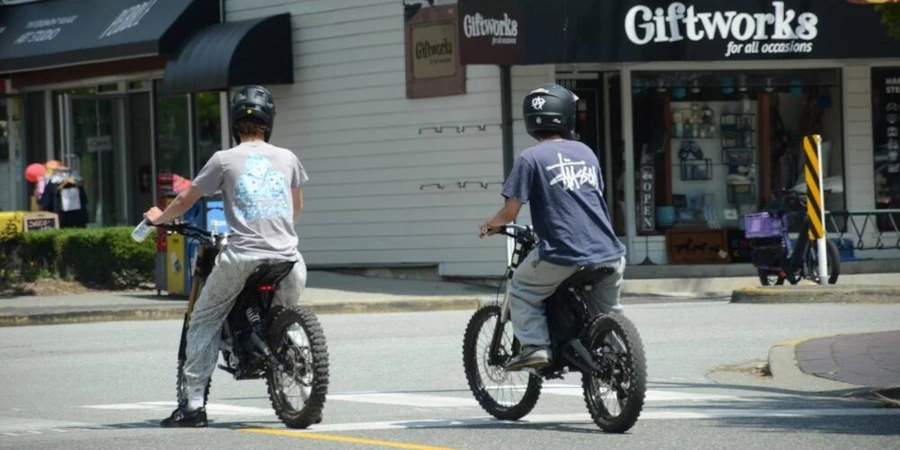
Common does not always mean safe
Many of us can look back on things we did when we were younger that would not be considered acceptable today. Some of those activities may have ended without anyone being injured, but that does not mean they were safe.
History is full of driving practices that were once accepted but are now recognized as dangerous. Few people today would argue that seat belts, child restraints, or stronger impaired driving laws made our roads less safe simply because earlier generations managed without them.
The same principle applies today. Successfully completing a high-speed manoeuvre without crashing does not prove that the behaviour was safe. It only means that the risk did not result in a bad outcome on that occasion.
Public roads are different from recreation areas
There is nothing wrong with enjoying motorcycles or developing riding skills. Dirt bikes, off-road vehicles, and motorcycles can provide a great way to learn responsibility, vehicle control, and respect for the machine.
The concern arises when those activities move onto public roads. Roads are shared by drivers with different levels of experience, pedestrians, cyclists, commercial vehicles, and emergency responders. Other road users should not have to anticipate unexpected manoeuvres from an unlicensed vehicle or a rider who is practising stunts.
Unlike a trail or private riding area, everyone using a public road is exposed to the consequences of another person's choices. Responsible road users should not be expected to anticipate stunt riding or an unlicensed off-road motorcycle appearing in traffic.
Licensing, registration, and insurance are more than administrative requirements. They are part of a system designed to ensure that operators understand the rules of the road, vehicles meet minimum safety standards, and anyone harmed in a collision have access to compensation.
In British Columbia, off-road motorcycles are generally not permitted to be operated on public highways unless they have been licensed, registered, insured, and equipped to meet the requirements of the Motor Vehicle Act. Riding an unlicensed dirt bike on a public road can result in enforcement action even if no collision occurs.
The role of parents
Young riders are still developing their ability to assess risk and understand consequences. That does not excuse unsafe choices, but it does mean that adults have an important role to play.
Parents and guardians do more than provide equipment. They also teach attitudes about responsibility, rules, and respect for others. A young person who hears “everyone did that when I was young” may learn that traffic laws are optional as long as nobody gets hurt.
Allowing access to a motor vehicle also comes with responsibility. Young riders rarely have unrestricted access to an off-road motorcycle without adult involvement. Someone purchases it, transports it, stores it, maintains it, or gives permission for it to be used. That influence also brings an opportunity—and a responsibility—to teach where it can be ridden safely and legally.
Road safety is about preventing the crash before it happens
One of the most common arguments in these situations is that the rider is skilled and has not caused a collision. That may be true, but road safety is not measured only by the crashes we see. It is measured by the risks we choose to avoid.
A skilled rider can still make a mistake. A driver approaching a wheelie on a public road may react unexpectedly. A new driver, an older driver, or someone simply not expecting this behaviour may not have enough time or space to respond safely.
The goal is not to prevent young people from enjoying off-road motorcycles and other recreational vehicles. The goal is to help them learn where those activities belong and how their choices affect everyone else using the road.
Looking back fondly on our own youth is easy. Forgetting the close calls is even easier. Road safety isn't about proving that risky behaviour can be repeated without consequences. It's about recognizing unnecessary risks before someone pays the price for them.
Learn More
- Log in to post comments
Comments
This is a growing problem, and I think it will become significantly worse before it gets better. The sheer number of users of these various electrified devices (kick scooters, e-bikes, electric dirt bikes, legitimate mobility devices, one-wheel thingies, etc) is quite shocking. The retailers who sell them are under no obligation to explain the legalities of their use. Parents of the youths who are using them are oblivious to the dangers, and/or think they're just "kids being kids" as you described. The various levels of government are a decade behind on the issue of licensing, insurance and education. People look to the police to solve the problem, as usual. But they're understaffed, overworked, and ill-equipped to address the issue.
- Log in to post comments
A Growing Problem