
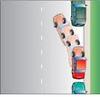
 You're driving along a city street when the vehicle ahead slows, signals to the right and stops beside an empty curbside parking space. The driver begins positioning the vehicle to back into the parking space. Do you wait, or is it acceptable to drive around?
This situation is common, but the answer isn't found in a single section of the Motor Vehicle Act. Instead, both drivers have responsibilities that depend on the manoeuvres they are performing.
Several Rules Apply to Parallel Parking
The Motor Vehicle Act does not contain a section devoted specifically to parallel parking. Instead, the manoeuvre involves several driving actions, each governed by its own rules:
- positioning the vehicle to begin the parking manoeuvre (including changing lanes where necessary),
- overtaking by the following driver, and
- backing into the parking space.
The law treats these as separate driving actions because each presents a different potential conflict with other road users. Understanding those conflicts helps drivers anticipate what others may do and avoid collisions.
As the parking driver positions the vehicle to begin the manoeuvre, Section 151 (Driving on Laned Roadway) may also apply where the roadway is divided into marked lanes. It requires that a driver not move from one lane to another unless the movement can be made safely and without affecting the travel of another vehicle.
If the following driver decides to pass, Section 158 (Overtaking and Passing) prohibits driving to the left side of the roadway unless the manoeuvre can be completed safely.
When reversing into the parking space, Section 193 (Caution in Backing Vehicle) requires that the vehicle not be backed unless the movement can be made safely and without interfering with other traffic.
If a collision occurs, investigators will consider whether each driver met these responsibilities. There is no automatic answer as to who is responsible.
If You're Parallel Parking
Tuning Up for Drivers recommends checking traffic behind you before stopping. Signal your intention to stop by applying your brakes and using your right turn signal well before reaching the parking space so that following drivers understand what you intend to do.
Before positioning your vehicle or beginning to reverse, make sure you have enough room to complete each movement safely. Before reversing, complete a 360° observation to ensure there is an adequate gap in traffic. Watch carefully for approaching vehicles, pedestrians, cyclists and other vulnerable road users. Remember that the front of your vehicle will swing into the traffic lane as you begin backing into the parking space.
Once parked beside the curb, the right side of your vehicle must be within 30 cm of it.
If You're Following a Driver Who Is Parallel Parking
If the vehicle ahead slows, stops beside a parking space and signals to the right, be alert to the possibility that the driver is preparing to parallel park.
Although you may be able to pass on the left, don't assume that doing so is your best option. Before deciding to pass, consider oncoming traffic, pedestrians crossing the street, cyclists approaching from behind, and the fact that the front of the parking vehicle will swing toward your lane as it begins to reverse.
In many situations, waiting a few seconds while the driver completes the parking manoeuvre is the safest choice. The delay is usually brief and greatly reduces the risk of a collision.
Who Would Be Responsible for a Collision?
Responsibility depends on the circumstances. Questions that investigators may consider include:
- Did the parking driver ensure that positioning the vehicle and reversing could be done safely?
- Did the parking driver keep a proper lookout throughout the manoeuvre?
- Could the following driver safely have waited instead of attempting to pass?
- If the following driver passed, could the manoeuvre be completed safely?
- Did either driver fail to notice pedestrians, cyclists or other road users?
Neither driver is relieved of the responsibility to avoid a collision whenever it is reasonably possible to do so.
The Best Choice Is Often the Simplest
A little patience can prevent an expensive collision. Waiting a few seconds while another driver completes a parallel parking manoeuvre is usually safer than trying to squeeze past. When it's your turn to parallel park, you'll probably appreciate drivers who extend the same courtesy to you.
Before deciding to pass, ask yourself: "Will this save me more than a few seconds?" In most cases, the answer is no. Waiting briefly allows the other driver to complete the manoeuvre safely and lets everyone continue on their way with less risk and less frustration.
Related Resources
- ICBC – Tuning Up for Drivers
- British Columbia Motor Vehicle Act
- Case Law: Driver’s Duty When Passing
- Case Law: Harvey v Robin (Backing and Collision Responsibility)
If this helped clarify the situation, consider sharing it with another driver.
- Log in to post comments