
How Far Into a Parking Stall Should You Park?
 A DriveSmartBC reader asked about parking in an underground condominium garage. The building was constructed in the 1970s, the parking stalls are small, and structural columns make some of them even more difficult to use. The reader uses a walker and needs enough room beside the vehicle to get in and out. Neighbours have complained that the vehicle is not parked far enough forward in the stall.
 A DriveSmartBC reader asked what rules apply when a vehicle is towed from a business parking lot. The situation involved a large commercial lot serving several businesses, limited signage and a vehicle towed shortly after it was parked.
 What responsibility does a driver have when stopping a vehicle creates a hazard for other road users? A 2009 decision of the Supreme Court of British Columbia illustrates that complying with a specific traffic rule is not necessarily the end of the matter.
 Question: I live on a street where there is a T intersection. I'm wondering if it is OK to park in the top T portion of the intersection.
 Knowing which way to turn your wheels when parking on a hill is a driving skill that many people learn for their road test and then rarely think about again. Turning your wheels the wrong way can allow a vehicle to roll into traffic if the parking brake isn't applied properly or a mechanical failure occurs. Fortunately, there are only three simple rules to remember when parking on a hill in British Columbia.
 Have you ever wondered why parking lots seem to force drivers and pedestrians into the same space? At many shopping centres, every customer must walk across the path of moving vehicles to reach the entrance, even though this appears to create unnecessary conflict.
 Parking too close to a driveway, crosswalk, fire hydrant, or other roadside feature can result in a parking ticket and, in some situations, your vehicle may also be towed. It can also create unnecessary hazards for other road users. One DriveSmartBC reader asked for a reminder of the minimum parking distances required in British Columbia after repeatedly finding vehicles blocking access to the end of his driveway. Knowing these distances before you park can help you avoid enforcement action and inconvenience.
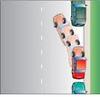 You're driving along a city street when the vehicle ahead slows, signals to the right and stops beside an empty curbside parking space. The driver begins positioning the vehicle to back into the parking space. Do you wait, or is it acceptable to drive around?