
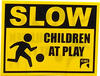
 Every now and then, you will see them on a residential street: temporary plastic or corrugated yard signs, pushed into the grass on wire stakes, asking drivers to slow down because children are playing. They are always put up by residents with the absolute best of intentions. Frustrated by speeding traffic outside their front doors, neighbours are hoping to protect the kids on their block.
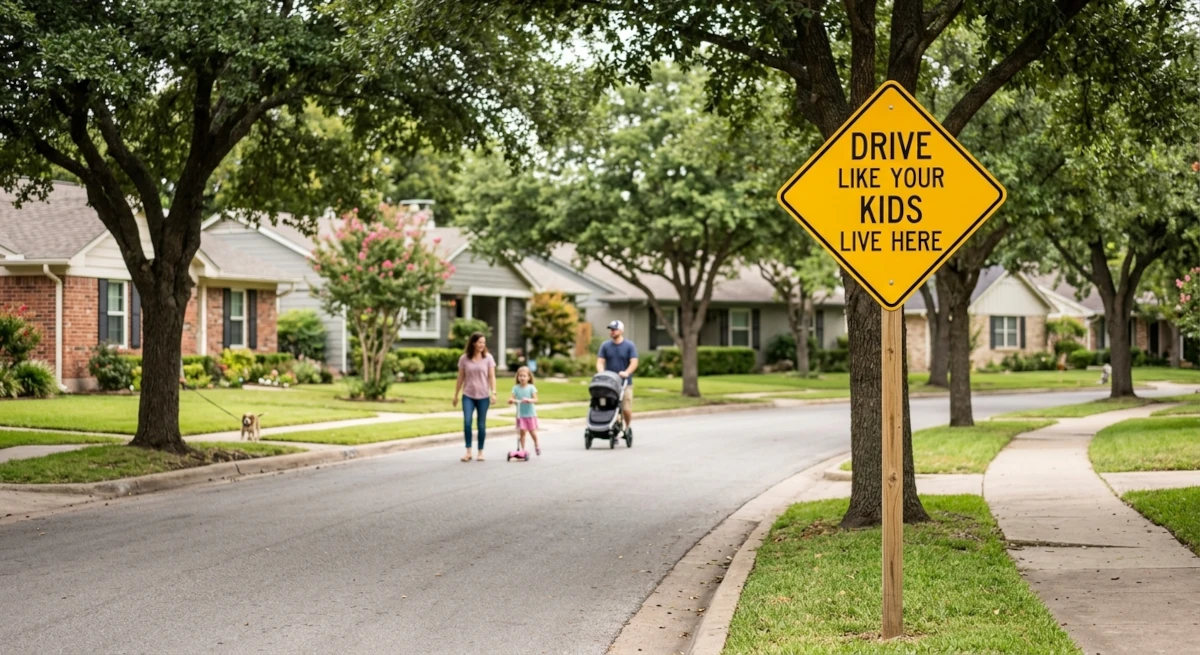
But while the motivation is completely understandable, a comprehensive traffic engineering study by the Wisconsin Department of Transportation reveals that these signs are not actually a useful solution. In fact, the data shows they can have the opposite effect.
Drivers Simply Ignore Them
The biggest issue with these lawn signs is driver psychology. For a traffic sign to work, drivers must respect it.
When drivers see the children at play signs on a lawn or boulevard, they instantly recognize them as non-binding. Because they are makeshift and temporary, drivers quickly desensitize to them, treating them as visual background noise. The study confirmed that these signs have no measurable effect on reducing vehicle speeds or changing driver behaviour.
Furthermore, traffic signs are designed to warn of fixed, permanent hazards—like a sharp curve or a dead end. Because children do not play in the exact same spot at all hours of the day, the sign lacks consistent context. Drivers learn that the "hazard" rarely matches reality, so they stop paying attention to the sign altogether.
The Hidden Danger: A False Sense of Security
The most concerning takeaway from the safety data is not how drivers react to the signs, but how children and parents react to them.
When a resident pushes a sign into the grass, it creates an illusion of safety. Parents can easily become slightly less vigilant, and children often get the false impression that the sign magically shields them from harm. This false sense of security can lead to kids playing closer to live traffic lanes with less caution.
Additionally, if drivers are trained to only look out for children where a lawn sign is present, it creates an extra risk for the next street over where no signs have been put up.
Real Solutions for Speeding Neighbourhoods
Putting up an aftermarket yard sign feels proactive, but the data proves it is a band-aid that doesn't change driver habits. If a neighbourhood has a genuine speeding problem, real safety relies on solutions that drivers cannot ignore:
- Report the Speeding: Document the specific times of day when drivers are racing through and request targeted enforcement from your local RCMP or municipal police force.
- Petition for Engineering Changes: Work with neighbours to request permanent, physical traffic calming from the city engineering department.
- Keep Play Off the Road: No sign can physically stop a vehicle in time if a child suddenly steps out from behind a parked car. Keeping active play zones strictly confined to backyards, parks, and designated green spaces remains the most effective defence.
Do you see these signs in your neighbourhood? Help start the conversation about real traffic safety by using the buttons below to share this article with your community.
- Log in to post comments