
Q&A - Driver Right of Way Over Pedestrians
- Read more about Q&A - Driver Right of Way Over Pedestrians
- Log in to post comments
 Question: I live in quiet little Summerland and my question is about right of way. Our busiest intersection is a T-junction complete with 3 cross walks. Traffic usually proceeds through that T junction at a very slow pace.
 How does road design impact your safety when you cross the street? Civil engineer Rob Barnes—better known online as
 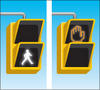 No matter how quickly I start to cross once the walk light comes on or how fast I walk, I can make it only halfway across and by then the orange flashing hand has appeared. Drivers proceed even though I am still in the crosswalk trying desperately to make it safely to the other side.
 A recent study by Todd Litman of the
  The University of British Columbia's
  This case involves a collision between a driver and a pedestrian at the intersection of East 3rd Avenue and Cotton Drive in Vancouver. Lily Huang was walking westbound on the north side of East 3rd Avenue crossing Cotton Drive and Dwight Wamboldt was driving eastbound on East 3rd Avenue intending to turn left onto Cotton Drive.
 Part of Parachute Canada's