Keep Right, Let Others Pass: What Does it Mean in B.C.?
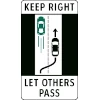 You may have noticed a new version of the familiar highway sign in British Columbia: Keep Right, Let Others Pass.

Highway lane use information.
You may have noticed a new version of the familiar highway sign in British Columbia: Keep Right, Let Others Pass.
 Passing lanes are designed to help drivers move safely around slower traffic, but problems can arise when a pass is not completed before the lane ends. A BC court case provides an important lesson about cooperation, awareness, and avoiding a collision when two lanes become one.
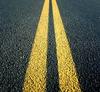 Question: I was asked about not crossing a double solid yellow line when driving. Two friends were talking about it and thought there had been an update made to the laws that allowed a driver to cross a double line under certain circumstances. Was this true?
 Question: After I have turned left onto a street that has 2 lanes of travel for my direction, how far do I have to drive before I can change into the right lane? I recently had a situation where a driver turning right on red nearly hit me when I tried to move over. Who is at fault?
 Effective in November 2018, commercial trucks were forbidden to use the leftmost lane on the Coquihalla Highway between Box Canyon and Zopkios. The aim of the pilot project was to keep "spun out" trucks on the right side of the highway and the left lane clear for snow removal equipment and tow trucks. The project has been expanded.
 Robert Tomkowicz was driving southbound on Highway 99 near Blundell Road in Richmond. He encountered a traffic backup and changed lanes to the right, crossing a white single solid line into the HOV lane. His intention was to use the exit onto the Steveston Highway.
Question: On my way home from dropping my daughter at school I make a left turn onto my street at an intersection and then need to turn left immediately again as my house is the 1st driveway. I do so over a single yellow line and am often getting honks etc.
I was issued a ticket two weeks after my accident for "failure to keep right." It was delivered to my home by two officers from the detachment in the city I live in. The officer that attended the accident scene was from a detachment equal distance away from the accident.
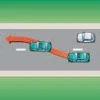 I am often asked to tell the motoring public that it is illegal to make a lane change in an intersection. I cannot do this, because there is no specific rule prohibiting this driving action in B.C.'s Motor Vehicle Act. However, a defensive driver will choose not to do this, even if it is legal.
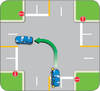 This article is dedicated to the middle aged male driver who turned left in the intersection and completed his left turn half way into my lane as I approached him and half way into the lane that he was supposed to be turning into. Was he being inattentive, careless or did he not know any better?